

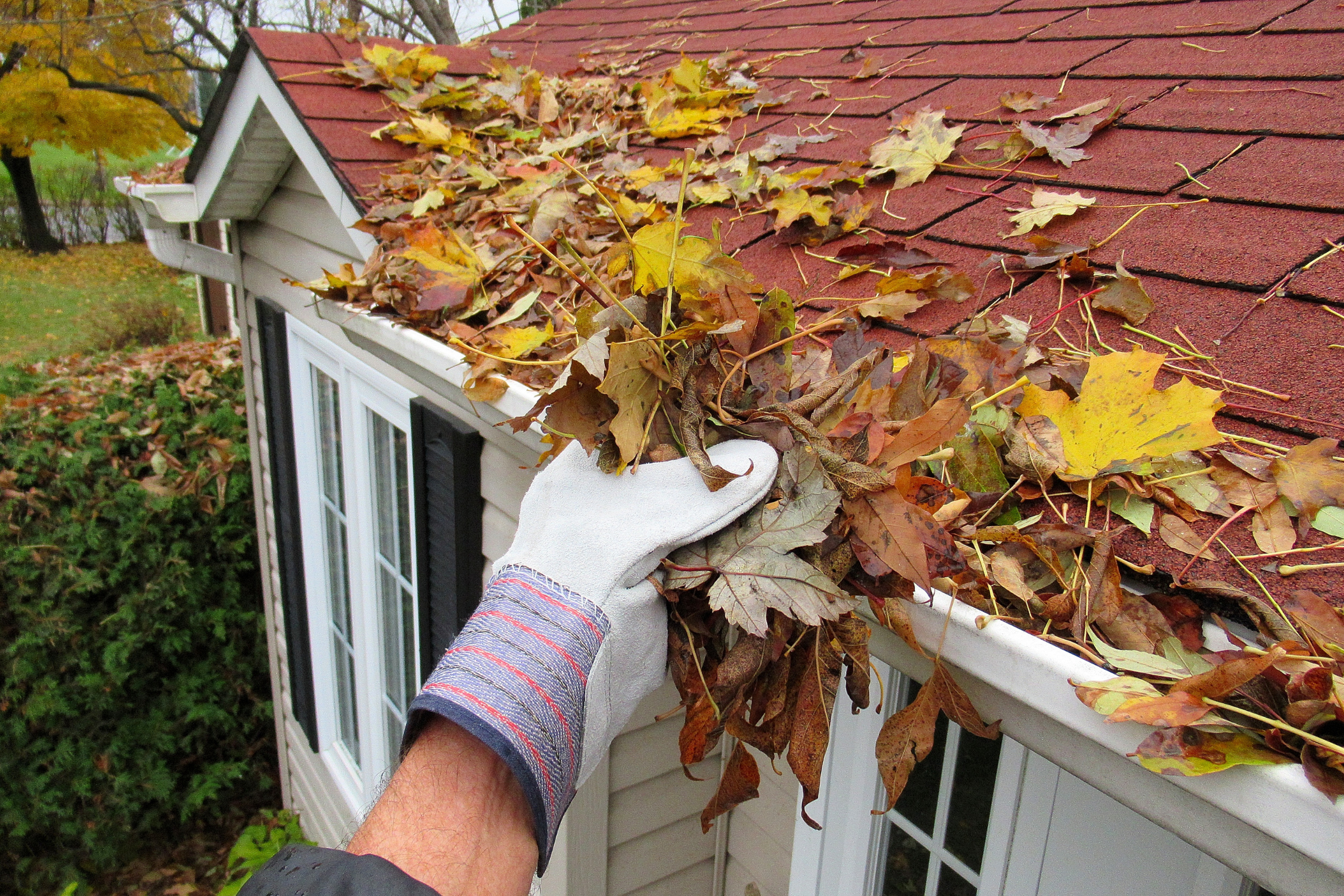
Most gutter advice pictures a tidy pile of oak leaves. That is not what we pull out of gutters in Tacoma. Here it is Douglas fir needles packed into a mat, brown cedar foliage that blows out of the tree all winter, bigleaf maple leaves the size of a dinner plate, and moss and roof grit underneath. Pine needles in gutters are what homeowners ask about most, but they are one of four culprits, and each defeats a different kind of guard.
Why Tacoma’s Canopy Sits Above Your Roofline
Our debris mix is unusual because our trees are unusually tall. The City of Tacoma’s 2018 urban tree canopy assessment found canopy covering 20 percent of the city’s land area. More useful is the height breakdown from the same LiDAR analysis: 33 percent of that canopy stands between 50 and 100 feet, and another 8 percent is taller than 100 feet. That puts 41 percent of Tacoma’s canopy above 50 feet, taller than almost every house in the city.
Elsewhere, homeowners deal with trees beside the house. Here much of the canopy sits directly over the roof, so debris does not blow past your gutters. It lands in them.
1. Douglas Fir Needles
Douglas fir needles are about an inch long, flat, and coated in a waxy cuticle. Those properties make them the worst thing in a Tacoma gutter.
Leaves stack loosely and leave gaps. Fir needles interlock. They settle flat, align with the trough, and press into a felted mat that behaves less like debris than like a floor. Water coming off the roof does not soak through it, it runs across the top and over the front lip. This is why homeowners swear the gutters are clean and still watch them overflow: the needles are lying flat in the bottom, invisible from the ground, working as a false floor. The wax compounds it by slowing decomposition, so the mat never breaks down and washes away the way leaf litter partly does.
Conifers also have no leaf-drop season. WSU’s Hortsense program notes that conifers “periodically shed older needles” as a normal process, so a house under Douglas fir gets needles in July as well as November.
2. Western Red Cedar Flagging
If you have ever panicked in September because the inside of your western red cedar turned brown, that is flagging, and it is normal.
WSU Hortsense describes it precisely: brown foliage “develops on the tree or shrub in mid- to late summer and is very obvious by early fall,” appearing as brown branchlets called flags spread through the canopy. After a dry summer, Hortsense adds, western red cedar “often dramatically shed older needles.”
The timing is what matters for gutters. That dead foliage does not come down when it turns brown. Per Hortsense, “most of the dead foliage is blown out of the plant by the wind in fall and winter.” So what you watch going brown in early September reaches your gutters gradually, delivered by the same windstorms that bring the heaviest rain.
Flagging is finer and more fibrous than fir needles. It threads into downspout openings and knits into a plug, which is why a gutter under cedar can look passable along its length and still back up at the drop.
3. Bigleaf Maple
Bigleaf maple is the only deciduous tree here, and it makes the list on scale alone. Mature trees run 50 to 100 feet, and King County’s native plant guide notes the leaves “are huge and can be up to ten inches wide.”
A ten-inch leaf does not float and let water past. Wet, it flattens against the trough and acts as a dam, and one leaf in the wrong place at a downspout can back up an entire run. That is a different failure from needles: needles reduce capacity everywhere, maple leaves block flow at one point, suddenly.
King County also notes the wood “can be brittle and lose branches if exposed to much wind,” so a maple over your roof delivers twigs and branchlets along with the leaves.
We will not tell you which month your maple drops. It varies by tree, exposure, and year, and we could not find a Northwest university or agency willing to put a date on it either. Use the city’s own signal instead: Tacoma moves its street sweepers onto the leaf-season schedule starting the third week of October. Our Tacoma rain calendar covers timing cleanings around that.
4. Moss, Grit, and Shingle Granules
The layer nobody expects is at the very bottom, and it does not come from a tree.
Wet, shaded conditions grow moss on north-facing roof planes, and fragments wash into the gutter and settle. Composition shingles shed mineral granules as they age, and granules are heavy, so they never leave. Add roof grit and dry-season dust and you get sludge in the bottom of the trough.
This is the debris that quietly kills gutters. It holds moisture against the metal permanently, starting corrosion at seams and cut ends, and it adds weight that loosens hangers and pulls runs out of pitch. Because it is dense sediment rather than fluffy debris, no guard stops it and no blower moves it. One aside: unusually granular sludge can mean your roof is further along than you think, and is worth mentioning to a roofer.
Which Gutter Guards Actually Survive Fine Needles
This is where guard marketing falls apart, because a system that handles leaves beautifully can be useless against Douglas fir. How the styles actually behave:
Open screens and perforated aluminum stop maple leaves and do essentially nothing for needles. Where openings are wider than a needle, needles pass straight through, or wedge upright in the holes and build a mat on top.
Foam and brush inserts are the worst match for our debris. Fine needles embed in the foam or between the bristles and turn the insert into a filter that cannot be rinsed clean. You replace the product instead of cleaning the gutter.
Reverse-curve and surface-tension covers move leaves well, but fine needles and shingle grit cling to the nose of the curve and travel in with the water. They also do nothing about sediment.
Fine woven stainless micro-mesh on a rigid frame is the only category that reliably keeps fir needles and cedar flagging out, because the aperture is smaller than the debris. The honest caveat: it keeps needles out of the trough, not off the house. They can mat on top of the mesh, so the surface still needs periodic brushing, and the system has to be pitched correctly to shed rather than collect.
Under heavy conifer cover, a good gutter guard turns three or four cleanings a year into one inspection. Not into zero, and anyone promising zero has not worked under a Douglas fir. Two things pair well with guards: a 6-inch trough holds more usable depth before a needle mat costs you capacity, and 3×4 downspouts are harder for flagging to plug.
Getting It Out
Worth saying, because it is the question we get most: a leaf blower will not lift a packed needle mat, and the mat is the part causing the overflow. It has to come out by hand, with the downspouts flushed separately, since plugs form at the outlet and elbow where you cannot see them. Our gutter cleaning service does both and flags the sagging hangers and early fascia rot a needle mat’s weight tends to cause.
Frequently Asked Questions
How Do You Get Pine Needles Out of Gutters?
By hand, not with a blower. Fir and pine needles interlock into a compacted mat in the bottom of the trough that a leaf blower skims over without lifting. Scoop the mat out, then flush the downspouts separately, since needles form hidden plugs at the outlet and elbow. Work from a ladder on a dry day, never from the roof.
Do Gutter Guards Work for Pine Needles?
Only some styles. Open screens and standard perforated aluminum let fine needles through or trap them upright. Foam and brush inserts clog irrecoverably. Fine woven stainless micro-mesh over a rigid frame is the category that actually keeps Douglas fir needles out, though the mesh surface still needs periodic brushing.
Why Is My Western Red Cedar Turning Brown and Filling My Gutters?
That is cedar flagging, and it is normal. WSU Hortsense notes the brown foliage develops in mid to late summer and is very obvious by early fall, and that most of it is blown out of the tree by wind in fall and winter. So it reaches your gutters gradually across the wettest months rather than all at once.
What Tree Debris Clogs Gutters Most in Tacoma?
Douglas fir needles, because they mat flat and water runs over the top rather than through. Western red cedar flagging plugs downspouts, bigleaf maple leaves dam flow at specific points, and moss with shingle granules forms a heavy sludge in the bottom that no guard system stops.