
Category: Brothers That Just Do Gutters

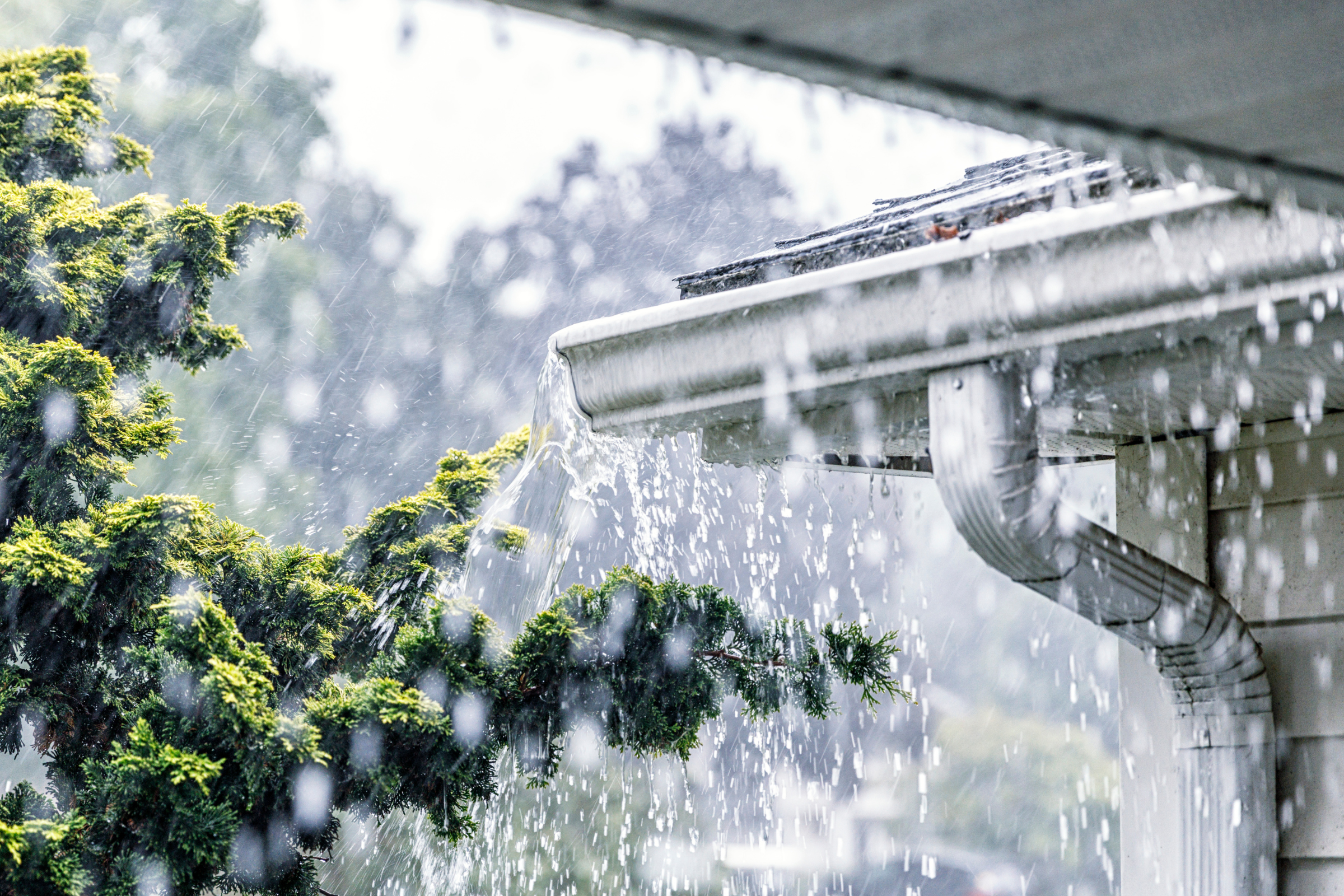
The Tacoma Rain Calendar: How Long You Actually Have Before Your Gutters Matter

In Tacoma, twice a year is the minimum: once in late spring after the seed and blossom drop, and once in fall before the rain settles in. If your roof sits under Douglas fir, cedar, or big-leaf maple, three times a year is closer to right, because conifers shed steadily instead of all at once. The fall cleaning is the one that matters most. Tacoma gets about 76 percent of its annual rain between October and March, so a September cleaning lands ahead of the season and a November one is already inside it.

What the Rain Data Actually Says

Most gutter advice says “twice a year” and stops there. But when to clean gutters in Tacoma is a question our rainfall answers pretty precisely, using NOAA’s 1991 to 2020 climate normals.

Tacoma averages 40.8 inches of precipitation a year, but it does not arrive evenly. July averages 0.6 inches. August is 0.8. Then the line bends hard: September 1.6, October 4.1, November 6.5, December 6.0.

Add up October through March and you get 31.0 inches, which is about 76 percent of the year’s total falling in six months. The other six months split the remaining quarter. That is the whole argument for timing your cleaning instead of picking a random Saturday.

The Deadline Nobody Tells You About

Look at the jump from September to October. Rainfall goes from 1.6 inches to 4.1 inches, and October alone averages 15 days with precipitation. That is not a gradual shift into fall, it is a switch flipping.

Here is the corroborating detail, and it comes from the City of Tacoma rather than a weather chart. The city moves its street sweepers onto the leaf-season schedule “starting the third week in October,” abandoning the fixed residential routes because of the volume of leaves coming down.

Think about what that means for your roof. If the city considers leaf volume a citywide problem by the third week of October, your gutters have been collecting that same debris for weeks already, and the heaviest rain of the year is a few days out. A cleaning booked for September is preventive. One booked for late October is remedial. Same service, very different outcome.

The Tacoma Gutter Calendar

MonthAvg. rainWhat is happening up thereWhat to do
January6.0 inPeak rain, 20 wet daysCheck flow during a storm
February4.0 inStill wet, wind damage showsWatch for sagging and overflow
March4.4 inRain tapering, moss growingBook spring service
April3.4 inBuds, catkins, maple seedsNothing yet, wait out the drop
May2.0 inSeed and blossom drop finishesSpring cleaning, cleaning #1
June1.4 inDry season beginsGood window for repairs
July0.6 inDriest month, debris bakes inBest month for installs
August0.8 inFir needles accumulating quietlyInspect, book fall service
September1.6 inRain returns, needles heavyFall cleaning, cleaning #2
October4.1 inLeaf drop peaks, 15 wet daysLast call, schedules are full
November6.5 inWettest month, 19 wet daysStorm checks only
December6.0 inStanding water, 20 wet daysClear downspouts if overflowing

Gutter Cleaning Frequency, Honestly

The right number depends less on the calendar than on what is growing over your house.

Twice a year is right for most Tacoma homes with an open lot or only distant trees. Clean in May after the spring drop finishes, and again in September before the rain.

Three times is the realistic number if you have Douglas fir, cedar, or pine directly overhead. Conifers do not have a tidy leaf-drop season, they shed needles all year, and needles are worse than leaves because they pack into a dense mat in the bottom of the trough instead of sitting loosely on top. Add a midwinter check to the May and September visits.

Four times, or gutter guards, is worth considering if you have heavy mixed cover, a roof valley that funnels debris into one spot, or a two-story roofline that makes DIY checks genuinely unsafe. At that point you are paying for cleanings often enough that a guard system starts to pencil out.

One thing worth saying plainly: more frequent cleaning does not fix a gutter that is pitched wrong or short on downspouts. If yours overflow within weeks of a cleaning, the problem is the system, not the schedule.

Why the Timing Matters More Here

A clogged gutter in a dry climate is a nuisance. A clogged gutter in Tacoma in November is a system pushing 6.5 inches of water somewhere it should not go, over 19 separate days.

Overflow runs down the fascia and rots the wood the gutter is hanging on. It sheets against siding and windows. It pools at the foundation during the exact months the soil is already saturated and has nowhere to put more water. None of it happens suddenly, which is why it goes unnoticed until something expensive shows up. For a fuller look at what actually ends up in a Tacoma gutter and how fast, see our guide to local debris.

Book Before the Rain, Not During It

Here is the practical reality of this trade in the Pacific Northwest: everyone calls at the same time. The phone starts ringing the week of the first real storm, which is usually mid to late October, and by then the calendar is already tight. The homeowners who get the convenient appointment are the ones who booked in August or September, before anything was visibly wrong.

If you are reading this in summer, that is the good news. You have room to choose your date. Our gutter cleaning service covers the gutters and the downspouts by hand, with an inspection that flags loose hangers and early rot while the ladder is already up. If you would rather not think about it twice a year, the maintenance program puts you on a schedule so the timing takes care of itself.

Schedule online and pick your window while there are still windows to pick.

Frequently Asked Questions

When Should You Clean Gutters in Tacoma?

Clean twice a year: once in May after the spring seed and blossom drop finishes, and once in September before the wet season starts. September is the more important of the two, because Tacoma gets roughly 76 percent of its annual rain between October and March. Homes under conifers should add a midwinter cleaning.

How Often Should You Clean Your Gutters?

Twice a year is the minimum for most Tacoma homes. Three times is more realistic under Douglas fir, cedar, or pine, because conifers shed needles year round and needles pack into the bottom of the trough. Heavy mixed tree cover or a debris-collecting roof valley can justify four visits a year or a guard system.

What Is the Best Time to Clean Gutters in the Pacific Northwest?

Late summer through September. The dry season means debris is loose and easy to clear, access is safe, and the work lands before October, when Tacoma’s rainfall jumps from 1.6 inches to 4.1 inches. Waiting until the rain starts means cleaning a wet, heavy mat during the season instead of ahead of it.

Is October Too Late for Fall Gutter Cleaning in Tacoma?

Not too late to be worth doing, but you are behind the curve. The City of Tacoma shifts its street sweepers to the leaf-season schedule the third week of October because of leaf volume, and gutter schedules fill up the same week. A cleaning in October still helps; September is the window you actually want.

Fir Needles, Cedar Flagging, and Bigleaf Maple: What Is Really Filling Your Gutters

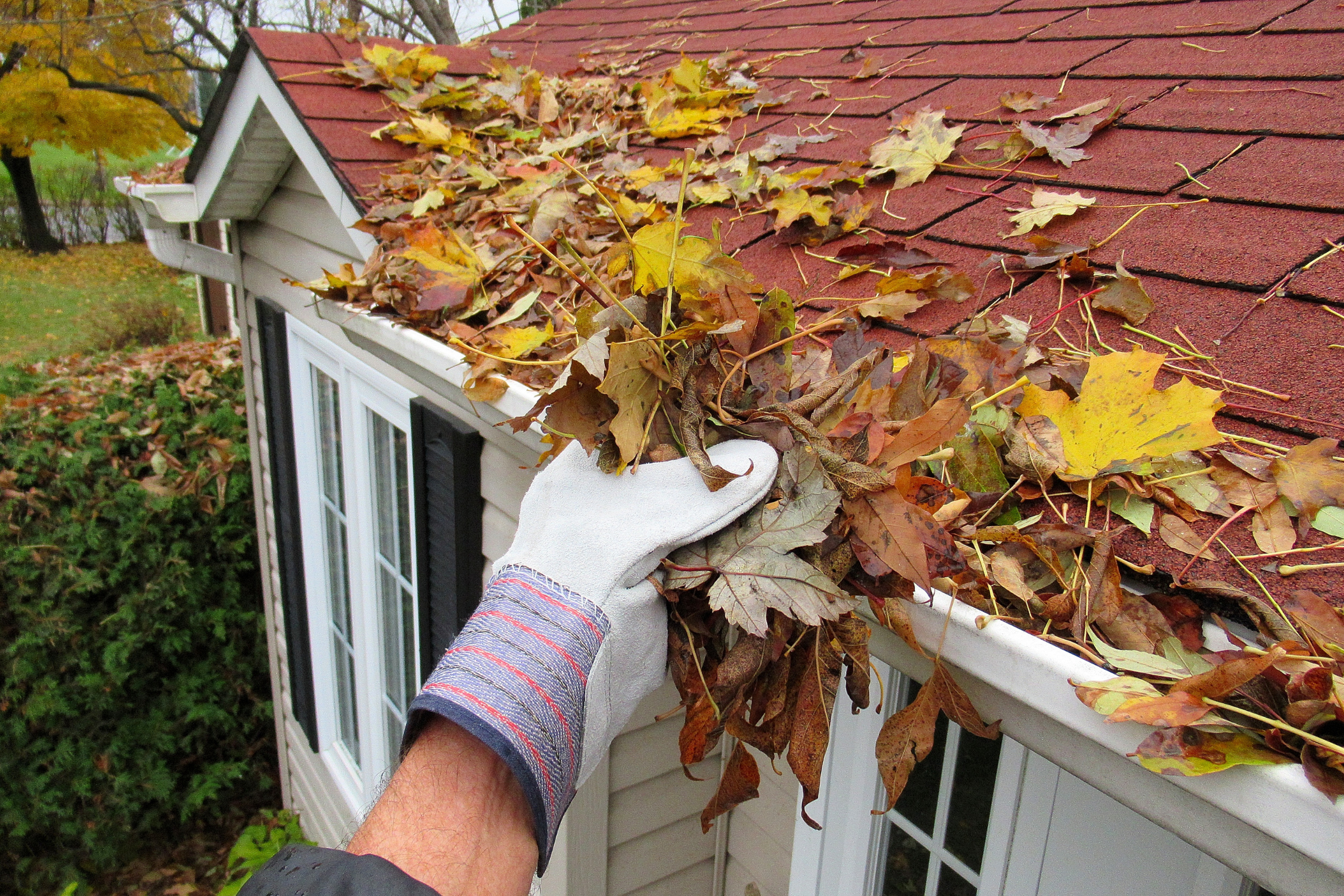
Most gutter advice pictures a tidy pile of oak leaves. That is not what we pull out of gutters in Tacoma. Here it is Douglas fir needles packed into a mat, brown cedar foliage that blows out of the tree all winter, bigleaf maple leaves the size of a dinner plate, and moss and roof grit underneath. Pine needles in gutters are what homeowners ask about most, but they are one of four culprits, and each defeats a different kind of guard.

Why Tacoma’s Canopy Sits Above Your Roofline

Our debris mix is unusual because our trees are unusually tall. The City of Tacoma’s 2018 urban tree canopy assessment found canopy covering 20 percent of the city’s land area. More useful is the height breakdown from the same LiDAR analysis: 33 percent of that canopy stands between 50 and 100 feet, and another 8 percent is taller than 100 feet. That puts 41 percent of Tacoma’s canopy above 50 feet, taller than almost every house in the city.

Elsewhere, homeowners deal with trees beside the house. Here much of the canopy sits directly over the roof, so debris does not blow past your gutters. It lands in them.

1. Douglas Fir Needles

Douglas fir needles are about an inch long, flat, and coated in a waxy cuticle. Those properties make them the worst thing in a Tacoma gutter.

Leaves stack loosely and leave gaps. Fir needles interlock. They settle flat, align with the trough, and press into a felted mat that behaves less like debris than like a floor. Water coming off the roof does not soak through it, it runs across the top and over the front lip. This is why homeowners swear the gutters are clean and still watch them overflow: the needles are lying flat in the bottom, invisible from the ground, working as a false floor. The wax compounds it by slowing decomposition, so the mat never breaks down and washes away the way leaf litter partly does.

Conifers also have no leaf-drop season. WSU’s Hortsense program notes that conifers “periodically shed older needles” as a normal process, so a house under Douglas fir gets needles in July as well as November.

2. Western Red Cedar Flagging

If you have ever panicked in September because the inside of your western red cedar turned brown, that is flagging, and it is normal.

WSU Hortsense describes it precisely: brown foliage “develops on the tree or shrub in mid- to late summer and is very obvious by early fall,” appearing as brown branchlets called flags spread through the canopy. After a dry summer, Hortsense adds, western red cedar “often dramatically shed older needles.”

The timing is what matters for gutters. That dead foliage does not come down when it turns brown. Per Hortsense, “most of the dead foliage is blown out of the plant by the wind in fall and winter.” So what you watch going brown in early September reaches your gutters gradually, delivered by the same windstorms that bring the heaviest rain.

Flagging is finer and more fibrous than fir needles. It threads into downspout openings and knits into a plug, which is why a gutter under cedar can look passable along its length and still back up at the drop.

3. Bigleaf Maple

Bigleaf maple is the only deciduous tree here, and it makes the list on scale alone. Mature trees run 50 to 100 feet, and King County’s native plant guide notes the leaves “are huge and can be up to ten inches wide.”

A ten-inch leaf does not float and let water past. Wet, it flattens against the trough and acts as a dam, and one leaf in the wrong place at a downspout can back up an entire run. That is a different failure from needles: needles reduce capacity everywhere, maple leaves block flow at one point, suddenly.

King County also notes the wood “can be brittle and lose branches if exposed to much wind,” so a maple over your roof delivers twigs and branchlets along with the leaves.

We will not tell you which month your maple drops. It varies by tree, exposure, and year, and we could not find a Northwest university or agency willing to put a date on it either. Use the city’s own signal instead: Tacoma moves its street sweepers onto the leaf-season schedule starting the third week of October. Our Tacoma rain calendar covers timing cleanings around that.

4. Moss, Grit, and Shingle Granules

The layer nobody expects is at the very bottom, and it does not come from a tree.

Wet, shaded conditions grow moss on north-facing roof planes, and fragments wash into the gutter and settle. Composition shingles shed mineral granules as they age, and granules are heavy, so they never leave. Add roof grit and dry-season dust and you get sludge in the bottom of the trough.

This is the debris that quietly kills gutters. It holds moisture against the metal permanently, starting corrosion at seams and cut ends, and it adds weight that loosens hangers and pulls runs out of pitch. Because it is dense sediment rather than fluffy debris, no guard stops it and no blower moves it. One aside: unusually granular sludge can mean your roof is further along than you think, and is worth mentioning to a roofer.

Which Gutter Guards Actually Survive Fine Needles

This is where guard marketing falls apart, because a system that handles leaves beautifully can be useless against Douglas fir. How the styles actually behave:

Open screens and perforated aluminum stop maple leaves and do essentially nothing for needles. Where openings are wider than a needle, needles pass straight through, or wedge upright in the holes and build a mat on top.

Foam and brush inserts are the worst match for our debris. Fine needles embed in the foam or between the bristles and turn the insert into a filter that cannot be rinsed clean. You replace the product instead of cleaning the gutter.

Reverse-curve and surface-tension covers move leaves well, but fine needles and shingle grit cling to the nose of the curve and travel in with the water. They also do nothing about sediment.

Fine woven stainless micro-mesh on a rigid frame is the only category that reliably keeps fir needles and cedar flagging out, because the aperture is smaller than the debris. The honest caveat: it keeps needles out of the trough, not off the house. They can mat on top of the mesh, so the surface still needs periodic brushing, and the system has to be pitched correctly to shed rather than collect.

Under heavy conifer cover, a good gutter guard turns three or four cleanings a year into one inspection. Not into zero, and anyone promising zero has not worked under a Douglas fir. Two things pair well with guards: a 6-inch trough holds more usable depth before a needle mat costs you capacity, and 3×4 downspouts are harder for flagging to plug.

Getting It Out

Worth saying, because it is the question we get most: a leaf blower will not lift a packed needle mat, and the mat is the part causing the overflow. It has to come out by hand, with the downspouts flushed separately, since plugs form at the outlet and elbow where you cannot see them. Our gutter cleaning service does both and flags the sagging hangers and early fascia rot a needle mat’s weight tends to cause.

Frequently Asked Questions

How Do You Get Pine Needles Out of Gutters?

By hand, not with a blower. Fir and pine needles interlock into a compacted mat in the bottom of the trough that a leaf blower skims over without lifting. Scoop the mat out, then flush the downspouts separately, since needles form hidden plugs at the outlet and elbow. Work from a ladder on a dry day, never from the roof.

Do Gutter Guards Work for Pine Needles?

Only some styles. Open screens and standard perforated aluminum let fine needles through or trap them upright. Foam and brush inserts clog irrecoverably. Fine woven stainless micro-mesh over a rigid frame is the category that actually keeps Douglas fir needles out, though the mesh surface still needs periodic brushing.

Why Is My Western Red Cedar Turning Brown and Filling My Gutters?

That is cedar flagging, and it is normal. WSU Hortsense notes the brown foliage develops in mid to late summer and is very obvious by early fall, and that most of it is blown out of the tree by wind in fall and winter. So it reaches your gutters gradually across the wettest months rather than all at once.

What Tree Debris Clogs Gutters Most in Tacoma?

Douglas fir needles, because they mat flat and water runs over the top rather than through. Western red cedar flagging plugs downspouts, bigleaf maple leaves dam flow at specific points, and moss with shingle granules forms a heavy sludge in the bottom that no guard system stops.

What New Gutters Actually Cost in Tacoma (And What Moves the Number)

Most Tacoma homes land somewhere between $1,100 and $2,200 for a full seamless aluminum gutter replacement. That is third-party data, not a sales pitch: Homeblue puts seamless aluminum installation in Tacoma at $6.40 to $11.10 per linear foot, and a typical single-family home here carries 150 to 200 linear feet of gutter. Two-story access, 6-inch gutters, extra downspouts, rotted fascia, or gutter guards push that higher, sometimes past $4,000. Here is exactly what moves the number, and why two quotes on the same house can differ by $1,200.

Where Those Numbers Come From

No gutter company in this market publishes pricing, which is why searching “gutter installation cost Tacoma” sends you straight to a national lead-gen site. So let’s start with the public data.

Homeblue’s Tacoma figures put gutter installation at $5.30 to $11.70 per linear foot across all materials, narrowing to $6.40 to $11.10 for seamless aluminum. That works out to about $640 to $1,110 at 100 feet and $1,270 to $2,230 at 200 feet. Angi’s Seattle guide lands in the same neighborhood: $691 to $1,757 per project, averaging $1,223, with labor at $50 to $100 per hour.

Those ranges are wide on purpose. A rancher in South Tacoma and a two-story craftsman on North Slope aren’t the same job, even in identical materials. Here’s what separates them.

The Seven Things That Move Your Number

1. Linear Feet of Roofline

This is the base multiplier, and it isn’t the same as square footage. A compact two-story can have less gutter than a sprawling rambler with multiple roof planes, dormers, and a covered porch. Every extra roof plane adds an end cap, a corner, and often another downspout. Measure the roofline, not the house.

2. One Story vs. Two Story

Height is the biggest labor variable. Ground-level ladder work moves fast; second-story work means staging, longer setups, and a slower pace. At Angi’s $50 to $100 per hour, that time lands straight in your total. Add mature firs, tight side yards, or a hillside lot and access alone can shift a quote by several hundred dollars.

3. 5-inch vs. 6-inch gutter

Six-inch K-style holds roughly 40 percent more water than 5-inch and pairs with larger 3×4 downspouts. It costs more per foot, and in Tacoma’s kind of sustained winter rain it’s frequently the right call rather than an upsell, especially on steep roofs, large roof planes, or homes with a history of overflowing corners. Our 5-inch vs. 6-inch breakdown covers when the upsize is worth it.

4. Downspout Count, Size, and Where the Water Goes

This is where most quote-to-quote differences hide. Angi notes that moving from 2×3 to 3×4 downspouts raises cost while smaller ones lower it. A house needing seven downspouts costs meaningfully more than the same house quoted with four. The four-downspout version is also the one that overflows in November. Underground drainage away from the foundation is a separate line item again.

5. Fascia and Wood Repair

The most common surprise on a Pacific Northwest gutter job. Gutters that have been overflowing for years often hide soft, rotted fascia underneath, and new gutters can’t hang on wood that won’t hold a screw. Both Homeblue and Angi flag eave and fascia condition as a cost driver. A good contractor checks the fascia by hand before quoting; a cheap quote often just doesn’t look. See fascia board repair.

6. Tear-off and Haul-Away

Removing and disposing of your existing gutters is real labor and a real dump fee. Some quotes include it. Some quietly don’t. This one line item explains a surprising share of the gap between two bids on the same house.

7. Gutter Guards

Guards are priced separately, and they’re not a small add. Homeblue puts guard installation in Tacoma at $3.50 to $9.50 per linear foot, or roughly $610 to $1,660 on a 175-foot home, on top of the gutter. Under Douglas fir and big-leaf maple, plenty of Tacoma homeowners decide that math works. Others put the money toward a 6-inch gutter and clean twice a year. Both are defensible.

Seamless Gutter Cost in Tacoma, WA, By Material

Here is gutter replacement cost per linear foot by material, with what each works out to on a 175-foot home:

MaterialInstalled cost per linear footOn a 175-ft homeNotes
Vinyl$4.20 – $7.40 (Homeblue, Tacoma)$735 – $1,295Cheapest up front; sectional, not seamless, so more joints to leak
Seamless aluminum$6.40 – $11.10 (Homeblue, Tacoma)$4 – $7 (Angi, Seattle)$1,120 – $1,943The Tacoma default: rolled on site to one continuous length per run
Galvanized steel$8 – $9 (Angi, Seattle)$1,400 – $1,575Stronger under ladder and limb impact; can rust at cut ends over time
Copper$25 – $30 (Angi, Seattle)$4,375 – $5,250Historic and high-end homes; patinas, lasts decades
Gutter guards (add-on)$3.50 – $9.50 (Homeblue, Tacoma)$610 – $1,660Quoted on top of gutter, not instead of it

One more line that belongs in your budget: sales tax. Washington applies retail sales tax to labor as well as materials on work like this, and Tacoma’s combined rate is currently 10.5 percent, or about $189 on an $1,800 job. Rates vary by address across Pierce County, so confirm yours rather than assuming.

Why two quotes on the same house differ by $1,200

This is the part no cost calculator will tell you. When two contractors walk the same roofline and come back $1,200 apart, it’s almost never because one of them is greedy. It’s because they quoted two different jobs.

  • Tear-off and haul-away. One priced removal and disposal of the old gutter. One assumed you’d handle it, or planned to add it later.
  • Gutter size. A 5-inch quote and a 6-inch quote aren’t comparable. Neither are 2×3 and 3×4 downspouts.
  • Downspout count. Four versus seven changes material, labor, and whether the system keeps up in a Puget Sound downpour.
  • Fascia left as “TBD.” If rotted wood isn’t priced, it isn’t gone. It becomes a change order after the old gutter comes down.
  • Thickness and hanger spec. A .032 gutter on hidden hangers every 24 inches costs more than .027 on spikes every 36 inches. It also stays straight in year four.
  • Tax and disposal. In the total for one bidder, added at the end by the other.

The cheapest quote is very often the one missing the most scope. To compare bids honestly, ask every contractor for the same six things in writing: total linear feet, gutter size, downspout count and size, hanger type and spacing, whether tear-off and fascia repair are included, and whether sales tax is in the number shown. Once those match, a price difference is real information.

What about gutter cleaning?

Cleaning is a different budget entirely. Homeblue puts gutter cleaning in Tacoma at $0.60 to $1.10 per linear foot, or roughly $70 to $240 for a typical home: about $70 to $170 single story and $90 to $190 two story. In practice, published local minimums often start above those averages, and homes under heavy fir and maple cover need two visits a year, not one. Scope details are on our gutter cleaning page.

How we quote it

We won’t publish a flat price for your house, because a flat price for your house doesn’t exist until someone has looked at it. What we will do: measure the roofline, place downspouts based on where the water actually goes, put hands on the fascia before promising anything, and give you a written scope you could hold the next contractor to, with tear-off, guards, and tax broken out as their own lines instead of blended into one number.

If something we find changes the price, you hear it before we start, not after. See our gutter installation service, or request a free quote and we’ll come measure.

Frequently Asked Questions

How Much Do New Gutters Cost in Tacoma?

Most Tacoma homes run roughly $1,100 to $2,200 for a full seamless aluminum replacement, based on Homeblue’s Tacoma figure of $6.40 to $11.10 per linear foot and a typical 150 to 200 feet of roofline. Two-story access, 6-inch gutter, extra downspouts, fascia repair, or guards push it higher.

What is the Gutter Replacement Cost per Linear Foot?

Third-party data puts installed gutter in Tacoma at $5.30 to $11.70 per linear foot across all materials: about $4.20 to $7.40 for vinyl, $6.40 to $11.10 for seamless aluminum, $8 to $9 for galvanized steel, and $25 to $30 for copper. Guards add $3.50 to $9.50 per foot.

Is a 6-inch Gutter Worth the Extra Cost in Tacoma?

Often, yes. Six-inch K-style carries roughly 40 percent more water than 5-inch and pairs with larger 3×4 downspouts, which matters in Tacoma’s sustained winter rain. It’s most worth it on steep roofs, large roof planes, and homes that already overflow at the corners.

How Much Does Gutter Cleaning Cost in Tacoma?

Homeblue puts gutter cleaning in Tacoma at $0.60 to $1.10 per linear foot, or about $70 to $240 total, roughly $70 to $170 single story and $90 to $190 two story. Local minimums often start higher, and homes under heavy fir usually need two visits a year.

5-Inch vs. 6-Inch Gutters: What 40 Inches of Tacoma Rain Actually Needs

Tacoma gets about 40.8 inches of rain a year, and most homes here handle it fine on standard 5-inch K-style gutters. The houses that genuinely need 6-inch have something specific going on: a large roof plane, a steep pitch, too few downspouts, or Douglas fir dropping needles into the trough all winter. Rainfall alone rarely decides it in Pierce County. Here is how the sizing works, and how to tell which house you have.

Start With the Local Math

Tacoma averages 40.8 inches of precipitation a year, a little wetter than Seattle’s 39.3, based on NOAA’s 1991 to 2020 climate normals. November is the wettest month at 6.5 inches.

Look closer at that November figure, though. Those 6.5 inches arrive across roughly 19 rainy days, about a third of an inch a day. Our rain is persistent, not violent. The City of Tacoma’s own surface water manual says the same thing: the 2-year design storm is 2.0 inches over 24 hours, and even a 100-year event is 4.1 inches over 24 hours.

That matters more than any other number here, because gutter capacity is a question of inches per hour, not inches per year. A Gulf Coast thunderstorm drops two inches in an hour; here, two inches takes a day. Which is why 5-inch is honestly enough for a lot of Tacoma homes, provided it is clean, correctly pitched, and has enough downspouts.

Roof Area Is the Real Variable

Gutters are sized to the roof area draining into them, not to the square footage of the house. A 5-inch K-style gutter holds roughly 1.2 gallons per linear foot; a 6-inch holds about 2.0 gallons, close to 65 percent more. At the one-inch-per-hour intensity these charts assume, a 5-inch run is rated for about 5,500 square feet of roof and a 6-inch for about 7,960.

Those numbers look generous until you divide the roof up, because what counts is the area feeding each run. One long gutter catching a wide roof plane with one downspout at the far end is a different job than the same footage split across four runs. It is why two houses of identical size can need different gutters.

Pitch Multiplies the Load

A steeper roof behaves like a bigger roof. The standard adjustment factors:

  • Flat to 3/12 pitch: no adjustment
  • 4/12 to 5/12: add 5 percent
  • 6/12 to 8/12: add 10 percent
  • 9/12 to 11/12: add 20 percent
  • 12/12 and steeper: add 30 percent

The charts miss a second effect. On a steep roof, water leaves the edge with real momentum and can shoot straight over a narrow trough. That is not an overflow problem, it is an aim problem, and cleaning will never fix it. A 6-inch trough catches what a 5-inch throws past.

Why a Perfectly Clean 5-Inch Gutter Still Overflows

This is the part homeowners find maddening: cleaned in September, spilling over the front edge in November anyway. Usually one of three things is happening.

The trough is losing cross-section to debris. Under Douglas fir and big-leaf maple, needles and seed pods pack into a dense mat. A 5-inch gutter with an inch of packed needles has lost a large share of its capacity, and it did not take long. A 6-inch gutter under the same tree still has usable depth. In Tacoma, debris tolerance is the most common real reason to size up, not rainfall.

The water is concentrated at one point. Roof valleys funnel a large area into a narrow stream that hits the gutter in one spot. That spot overflows while the rest of the run sits half empty.

Or the outlets cannot keep up, which brings us to the part that gets ignored.

Downspout Size: 2×3 vs. 3×4

A gutter is a holding channel. Downspouts are the drain. Get the drain wrong and the size of the channel stops mattering.

A 2×3 inch downspout handles roughly 600 square feet of roof. A 3×4 handles about 1,200, roughly double. One downspout per 40 feet of run is the common minimum, and under heavy tree cover every 30 feet is the better target. Valleys and inside corners usually justify one of their own.

Here is the pairing that matters: 6-inch gutters on 2×3 downspouts create a bottleneck. The trough fills faster than the outlets can empty it and you have paid for capacity you cannot use. Six-inch belongs on 3×4. That is why the two upgrades are quoted together.

A Gutter Sizing Guide for Tacoma Homes

Roof area feeding one gutter runPitchTypical Tacoma callDownspouts
Under 1,200 sq ftUp to 6/125-inch K-style2×3, one every 30 to 40 ft
1,200 to 2,500 sq ftUp to 6/125-inch is usually fine3×4, or more 2×3 outlets
1,200 to 2,500 sq ftSteeper than 6/125-inch, or 6-inch under conifers3×4
2,500 to 4,000 sq ftAny6-inch K-style3×4, one every 30 ft
Over 4,000 sq ft, or commercialAny6-inch, sometimes 7-inch3×4 or larger

Treat this as a starting point, not a verdict. Tree cover, valley placement, and fascia condition can all move a house a row in either direction.

When 5-Inch Is Still the Right Answer

Plenty of Tacoma homes do not need the upgrade, and we would rather tell you that than sell it. A one-story or modest two-story with roof planes under about 1,200 square feet, a moderate pitch, enough downspouts, and no conifer overhead will do fine on 5-inch seamless aluminum for decades.

And 6-inch will not fix the wrong problem. If gutters overflow because the pitch is off, the hangers loosened, or there are three downspouts where there should be six, a wider trough just gives the water a bigger place to sit. Correcting slope, adding outlets, rehanging on hidden hangers, or adding gutter guards is often the better use of the same money. Diagnose first.

One Detail Nobody Local Talks About

One piece of metal matters almost as much as gutter size and almost never comes up in a quote: the gutter apron. It is the flashing that carries water off the roof edge into the trough instead of letting it wick backward onto the fascia. Without it, you can get rot behind a gutter that drains perfectly. It deserves its own post, and we will give it one.

How We Size It

We measure the roof planes, note the pitch, count the valleys, look up at what is growing over the house, and then recommend a size. Often that recommendation is 5-inch, and we say so. For the money side, our guide to what new gutters cost in Tacoma covers what the size decision does to the price.

When you are ready, see our gutter installation service or request a free quote.

Frequently Asked Questions

What Size Gutters Do I Need?

Most homes need 5-inch K-style gutters. Step up to 6-inch when a single gutter run drains more than about 2,500 square feet of roof, the pitch is steeper than 6/12, or heavy conifer debris keeps cutting into the trough’s capacity. The roof area feeding each run matters more than the size of the house.

Are 6-Inch Gutters Worth It for Heavy Rain in Tacoma?

Sometimes, but rainfall intensity is rarely the reason here. Tacoma’s 40.8 inches a year arrive at moderate intensity, spread across many days. The stronger local arguments for 6-inch are large or steep roof planes and constant fir and maple debris, which eats into a 5-inch trough’s usable depth much faster.

What Is the Difference Between 2×3 and 3×4 Downspouts?

A 2×3 downspout drains roughly 600 square feet of roof and a 3×4 drains about 1,200, close to double. A 3×4 also clogs less readily on needles and seed pods. Six-inch gutters should always be paired with 3×4 downspouts, otherwise the outlets bottleneck the extra trough capacity.

Are K-Style Gutters a Good Choice in Tacoma, WA?

Yes, and they are the standard here. K-style holds significantly more water than a half-round of the same nominal width, which is why a 5-inch K-style is rated for roughly twice the roof area of a 5-inch half-round. Half-round is mainly chosen on historic homes for appearance.