

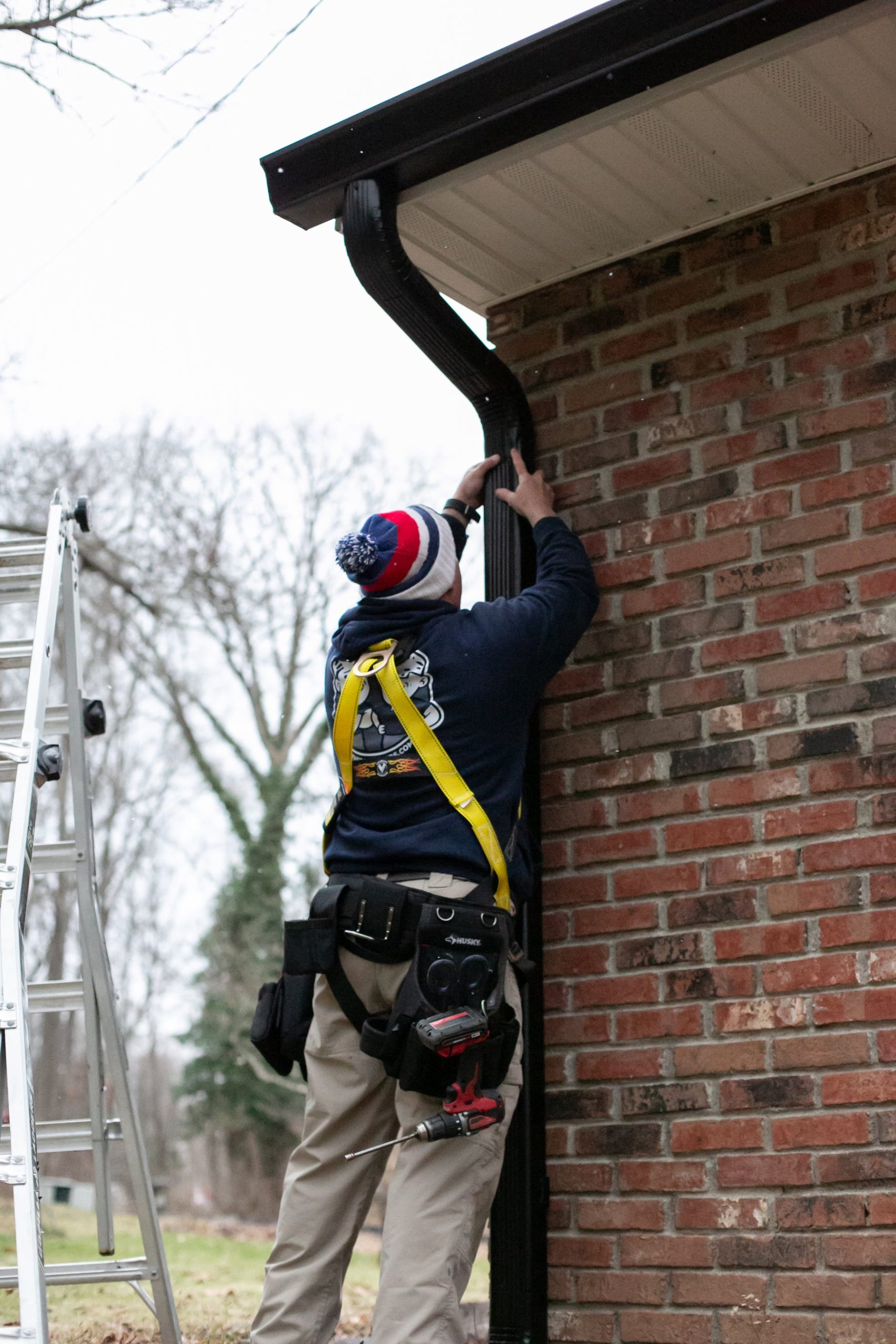
The first real storm of the season is when you find out. The downspout starts gurgling, then burping water back up at the top. Or you walk out to a spreading puddle against the foundation where there was dry ground in August. The gutters are fine. The problem is downstream of them, in a pipe you cannot see, and most Tacoma homeowners do not know they have one.
Here is what is buried in your yard, how to test it yourself, and what the city actually says about where roof water is supposed to end up.
The First Storm Tells You Everything
A downspout that gurgles is a downspout meeting resistance. Water leaving the roof has nowhere to go fast enough, so it backs up the pipe and finds the joint at the top, which is why you see it spilling from the elbow rather than the outlet.
Pooling at the foundation is the same failure one step further along. Gutters exist to move roof water away from the structure, and when the discharge end fails, all of it lands at the base of your walls during the months the soil is already saturated.
That is the mechanism behind foundation water damage from gutters, and it is slow: pressure at the wall, moisture into a crawlspace, erosion of the grading meant to carry water away. Nothing dramatic happens in one storm, which is exactly why it goes unaddressed until it is expensive.
Tightlines, Drywells, and Yard Drains
If your downspout disappears into the ground instead of ending in a splash block, it is connected to something. In Pierce County there are three common answers.
A tightline is a solid buried pipe carrying roof water away from the house, usually to the curb, a ditch, or a storm drain. Many Tacoma houses have one, inherited without documentation.
A drywell is a buried gravel-filled or perforated chamber that holds roof water and lets it soak into the surrounding soil instead of carrying it off site.
A yard drain is a grated catch basin in the lawn, tied into buried pipe that may run to either.
The distinction matters because they fail differently. A tightline fails at a single blockage or a crushed section, and it fails suddenly. A drywell fails gradually as the surrounding soil silts up and stops accepting water, so the symptom is slow backup that worsens each year. If yours worked for a decade and is now marginal every winter, suspect a drywell reaching the end of its life rather than a fresh clog.
How to Test and Flush a Tightline Once a Year
This is a useful annual habit and you can do it with a garden hose.
Work from the roof end, meaning the top of the buried run. Separate the downspout at the lowest accessible joint above where the pipe enters the ground, put the hose into the standpipe, turn it on, then go look at the outlet, whether that is a curb discharge, a ditch, or a pop-up emitter in the yard.
Water arriving at roughly the volume you put in means the line is clear. A trickle means a partial blockage or a silted line. Water rising back up the standpipe and never arriving means the run is blocked, and you should shut the hose off rather than keep pushing.
Do this in dry weather, and do not aim a pressure washer blindly down a buried line, because old pipe and glued joints can be damaged. If you cannot find the outlet at all, that is a real finding rather than a failure on your part.
Root intrusion is the usual culprit in older lines, and roots do not flush out with a hose. That is a snake or a jetting job, and depending on what a camera finds, a repair or a section replacement.
Our gutter repair service covers the above-ground side and underground gutter drainage covers what happens after the water leaves the downspout.
The Rules That Govern Downspout Drainage in Tacoma
Here is where this post earns its keep, because almost nobody local connects gutters to the actual rules.
Tacoma runs two separate systems. As the city puts it, the wastewater system “collects water that leaves homes and businesses through sinks, showers and toilets,” while the surface water system “collects water that runs off our streets, roofs, yards and driveways.” Roof water belongs to the second one.
The city states this as encouragement rather than a flat prohibition, so we will quote it exactly rather than characterize it: “Property owners are encouraged to make sure surface water from roofs, floor drains, sump pumps, etc., either soaks in on site or is directed to the surface water system.”
The reason is worth understanding. Stormwater entering wastewater lines during heavy rain creates peak flows that can overwhelm treatment capacity, which the city notes can result in “untreated or partially treated wastewater overflowing into basements, streets or Commencement Bay.” One house tied the wrong way is not the problem. Thousands during a November storm is. If you suspect your downspouts run to the sanitary side sewer, that is a question worth asking the city.
The Setbacks for Downspout Infiltration
If the answer for your property is soaking water into the ground, the Stormwater Management Manual sets out where that is allowed. For downspout full infiltration, the facility must be “at least 10 feet from any building structure and at least 5 feet from any other structure or property line.”
Two further limits homeowners rarely hear about: a minimum of 50 feet from the top of any slope greater than 20 percent and from geologically hazardous areas, which matters on Tacoma’s many hillside lots, and setbacks from onsite sewage systems per state rule WAC 246-272A-0210. A soils report is also required to design one at all, because whether your ground accepts water depends on soil composition, infiltration rate, and groundwater depth.
That last point is the honest one. Infiltration is right on some Tacoma lots and wrong on others, and glacial till does not care how much you would prefer a drywell.
A Rate Reduction Most Homeowners Never Hear About
This is a real incentive and it is almost never mentioned in this industry.
Under Tacoma Municipal Code 12.08.560, owners who install permanent low impact development practices beyond what the Stormwater Management Manual requires can apply to reduce their surface water rate. Mitigating one surface earns a one-category reduction and mitigating all of a property’s surfaces earns two, though the rate cannot drop below the undeveloped rate.
It is not a rebate you claim afterward. You have to request it before construction starts, submit design information for review, get the required permits, allow inspections, produce an operations and maintenance manual with annual reporting, and sign a covenant and easement agreement. If the practice goes unmaintained, the city can revoke both the approval and the reduction. Worth investigating if you are already planning drainage work; not worth restructuring your yard over.
About Permits, Carefully
We are not going to tell you whether your gutter job needs a permit, because the answer depends on your scope and the city is the only one who can give it.
What we can tell you is what the city publishes. Gutters and downspouts do not appear on Tacoma’s “What Requires a Permit” tip sheet at all. That same sheet does list “stormwater and sanitary sewer service connections or repairs” and “stormwater and sanitary sewer facility construction or alterations” as work requiring a site development permit, and it states plainly that it “does not substitute for codes and regulations.”
Read together, a reasonable line emerges. Replacing existing gutters like for like is not what that list is aimed at. Changing where your roof water discharges, connecting to a new system, or building a drywell is squarely stormwater territory. So if your project changes the destination of your roof water, call Tacoma Planning and Development Services at (253) 591-5030 before the work, not after.
If you want a look at your drainage before the rain arrives, get in touch. We will trace where your downspouts actually go, and if the above-ground system needs work, our gutter installation service handles that side.
Frequently Asked Questions
Where Should Downspouts Drain?
Away from the foundation, either soaking into the ground on your own property or into the surface water system. The City of Tacoma encourages property owners to ensure roof water “either soaks in on site or is directed to the surface water system” rather than into the sanitary sewer. If you infiltrate on site, Tacoma’s Stormwater Management Manual requires at least 10 feet of separation from any building structure.
How Do You Clear a Clogged Underground Downspout Drain?
Start by testing it with a garden hose from the roof end in dry weather, and watch the outlet. A trickle means a partial blockage or silting; water backing up the standpipe means the run is blocked. Do not pressure wash blindly down old pipe. Root intrusion, the most common cause in older tightlines, needs a snake or jetting rather than water volume.
Do I Need Approval to Disconnect a Downspout in Tacoma?
Possibly, because disconnecting a downspout changes where your roof water goes, and that is stormwater territory rather than gutter work. Tacoma’s permit tip sheet does not list gutters, but it does list stormwater service connections and alterations as requiring a site development permit. Call Planning and Development Services at (253) 591-5030 before the work.
Can Gutters Cause Foundation Water Damage?
Yes, though slowly. When gutters overflow or the buried drain line downstream fails, roof water is delivered to the base of the walls through Tacoma’s wettest months, when soil is already saturated. The result is pressure against the foundation, moisture in crawlspaces, and erosion of the grading meant to carry water away. It develops over seasons, not in one storm.
Licensed, Bonded & Insured · Washington Contractor License #BRTHRBT745J1