Category: Gutter Installation

Where Does Your Roof Water Go? Downspouts, Tightlines, and Tacoma Stormwater Rules

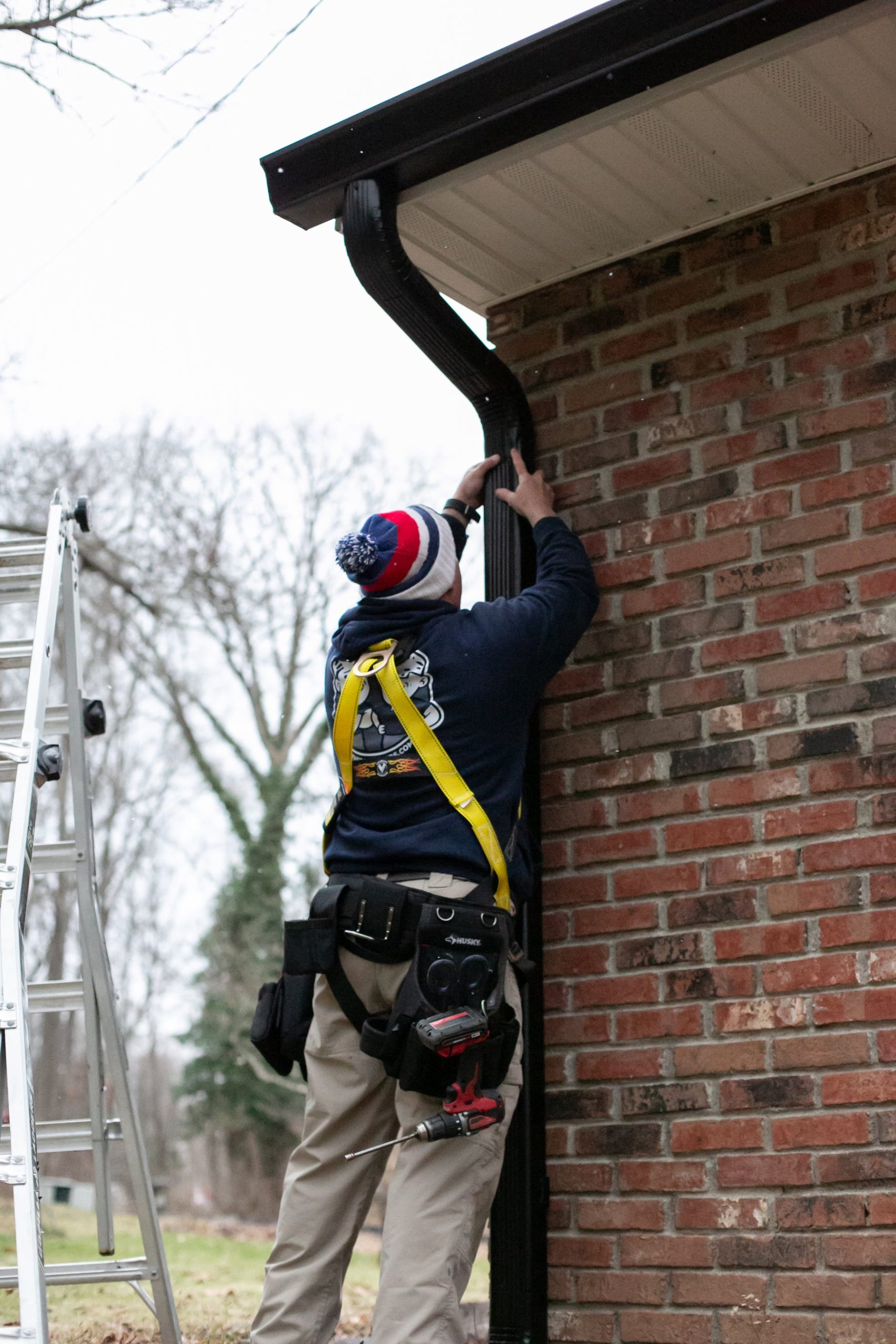
A Brothers that just do Gutters technician installing a downspout on a brick home
Licensed & Insured◆Locally Owned & Operated in Tacoma◆Solutionists, Not Salespeople◆Seamless Gutters Made On-Site◆BroGuard Fine-Mesh Gutter Protection◆Free, No-Pressure Gutter Quotes◆Backed by 25+ Years of the National Brand◆Licensed & Insured◆Locally Owned & Operated in Tacoma◆Solutionists, Not Salespeople◆Seamless Gutters Made On-Site◆BroGuard Fine-Mesh Gutter Protection◆Free, No-Pressure Gutter Quotes◆Backed by 25+ Years of the National Brand◆

The first real storm of the season is when you find out. The downspout starts gurgling, then burping water back up at the top. Or you walk out to a spreading puddle against the foundation where there was dry ground in August. The gutters are fine. The problem is downstream of them, in a pipe you cannot see, and most Tacoma homeowners do not know they have one. 

Here is what is buried in your yard, how to test it yourself, and what the city actually says about where roof water is supposed to end up.

The First Storm Tells You Everything

A downspout that gurgles is a downspout meeting resistance. Water leaving the roof has nowhere to go fast enough, so it backs up the pipe and finds the joint at the top, which is why you see it spilling from the elbow rather than the outlet.

Pooling at the foundation is the same failure one step further along. Gutters exist to move roof water away from the structure, and when the discharge end fails, all of it lands at the base of your walls during the months the soil is already saturated.

That is the mechanism behind foundation water damage from gutters, and it is slow: pressure at the wall, moisture into a crawlspace, erosion of the grading meant to carry water away. Nothing dramatic happens in one storm, which is exactly why it goes unaddressed until it is expensive.

Tightlines, Drywells, and Yard Drains

If your downspout disappears into the ground instead of ending in a splash block, it is connected to something. In Pierce County there are three common answers.

A tightline is a solid buried pipe carrying roof water away from the house, usually to the curb, a ditch, or a storm drain. Many Tacoma houses have one, inherited without documentation.

A drywell is a buried gravel-filled or perforated chamber that holds roof water and lets it soak into the surrounding soil instead of carrying it off site.

A yard drain is a grated catch basin in the lawn, tied into buried pipe that may run to either.

The distinction matters because they fail differently. A tightline fails at a single blockage or a crushed section, and it fails suddenly. A drywell fails gradually as the surrounding soil silts up and stops accepting water, so the symptom is slow backup that worsens each year. If yours worked for a decade and is now marginal every winter, suspect a drywell reaching the end of its life rather than a fresh clog.

How to Test and Flush a Tightline Once a Year

This is a useful annual habit and you can do it with a garden hose.

Work from the roof end, meaning the top of the buried run. Separate the downspout at the lowest accessible joint above where the pipe enters the ground, put the hose into the standpipe, turn it on, then go look at the outlet, whether that is a curb discharge, a ditch, or a pop-up emitter in the yard.

Water arriving at roughly the volume you put in means the line is clear. A trickle means a partial blockage or a silted line. Water rising back up the standpipe and never arriving means the run is blocked, and you should shut the hose off rather than keep pushing.

Do this in dry weather, and do not aim a pressure washer blindly down a buried line, because old pipe and glued joints can be damaged. If you cannot find the outlet at all, that is a real finding rather than a failure on your part.

Root intrusion is the usual culprit in older lines, and roots do not flush out with a hose. That is a snake or a jetting job, and depending on what a camera finds, a repair or a section replacement. 

Our gutter repair service covers the above-ground side and underground gutter drainage covers what happens after the water leaves the downspout.

The Rules That Govern Downspout Drainage in Tacoma

Here is where this post earns its keep, because almost nobody local connects gutters to the actual rules.

Tacoma runs two separate systems. As the city puts it, the wastewater system “collects water that leaves homes and businesses through sinks, showers and toilets,” while the surface water system “collects water that runs off our streets, roofs, yards and driveways.” Roof water belongs to the second one.

The city states this as encouragement rather than a flat prohibition, so we will quote it exactly rather than characterize it: “Property owners are encouraged to make sure surface water from roofs, floor drains, sump pumps, etc., either soaks in on site or is directed to the surface water system.”

The reason is worth understanding. Stormwater entering wastewater lines during heavy rain creates peak flows that can overwhelm treatment capacity, which the city notes can result in “untreated or partially treated wastewater overflowing into basements, streets or Commencement Bay.” One house tied the wrong way is not the problem. Thousands during a November storm is. If you suspect your downspouts run to the sanitary side sewer, that is a question worth asking the city.

The Setbacks for Downspout Infiltration

If the answer for your property is soaking water into the ground, the Stormwater Management Manual sets out where that is allowed. For downspout full infiltration, the facility must be “at least 10 feet from any building structure and at least 5 feet from any other structure or property line.”

Two further limits homeowners rarely hear about: a minimum of 50 feet from the top of any slope greater than 20 percent and from geologically hazardous areas, which matters on Tacoma’s many hillside lots, and setbacks from onsite sewage systems per state rule WAC 246-272A-0210. A soils report is also required to design one at all, because whether your ground accepts water depends on soil composition, infiltration rate, and groundwater depth.

That last point is the honest one. Infiltration is right on some Tacoma lots and wrong on others, and glacial till does not care how much you would prefer a drywell.

A Rate Reduction Most Homeowners Never Hear About

This is a real incentive and it is almost never mentioned in this industry.

Under Tacoma Municipal Code 12.08.560, owners who install permanent low impact development practices beyond what the Stormwater Management Manual requires can apply to reduce their surface water rate. Mitigating one surface earns a one-category reduction and mitigating all of a property’s surfaces earns two, though the rate cannot drop below the undeveloped rate.

It is not a rebate you claim afterward. You have to request it before construction starts, submit design information for review, get the required permits, allow inspections, produce an operations and maintenance manual with annual reporting, and sign a covenant and easement agreement. If the practice goes unmaintained, the city can revoke both the approval and the reduction. Worth investigating if you are already planning drainage work; not worth restructuring your yard over.

About Permits, Carefully

We are not going to tell you whether your gutter job needs a permit, because the answer depends on your scope and the city is the only one who can give it.

What we can tell you is what the city publishes. Gutters and downspouts do not appear on Tacoma’s “What Requires a Permit” tip sheet at all. That same sheet does list “stormwater and sanitary sewer service connections or repairs” and “stormwater and sanitary sewer facility construction or alterations” as work requiring a site development permit, and it states plainly that it “does not substitute for codes and regulations.”

Read together, a reasonable line emerges. Replacing existing gutters like for like is not what that list is aimed at. Changing where your roof water discharges, connecting to a new system, or building a drywell is squarely stormwater territory. So if your project changes the destination of your roof water, call Tacoma Planning and Development Services at (253) 591-5030 before the work, not after.

If you want a look at your drainage before the rain arrives, get in touch. We will trace where your downspouts actually go, and if the above-ground system needs work, our gutter installation service handles that side.

Frequently Asked Questions

Where Should Downspouts Drain?

Away from the foundation, either soaking into the ground on your own property or into the surface water system. The City of Tacoma encourages property owners to ensure roof water “either soaks in on site or is directed to the surface water system” rather than into the sanitary sewer. If you infiltrate on site, Tacoma’s Stormwater Management Manual requires at least 10 feet of separation from any building structure.

How Do You Clear a Clogged Underground Downspout Drain?

Start by testing it with a garden hose from the roof end in dry weather, and watch the outlet. A trickle means a partial blockage or silting; water backing up the standpipe means the run is blocked. Do not pressure wash blindly down old pipe. Root intrusion, the most common cause in older tightlines, needs a snake or jetting rather than water volume.

Do I Need Approval to Disconnect a Downspout in Tacoma?

Possibly, because disconnecting a downspout changes where your roof water goes, and that is stormwater territory rather than gutter work. Tacoma’s permit tip sheet does not list gutters, but it does list stormwater service connections and alterations as requiring a site development permit. Call Planning and Development Services at (253) 591-5030 before the work.

Can Gutters Cause Foundation Water Damage?

Yes, though slowly. When gutters overflow or the buried drain line downstream fails, roof water is delivered to the base of the walls through Tacoma’s wettest months, when soil is already saturated. The result is pressure against the foundation, moisture in crawlspaces, and erosion of the grading meant to carry water away. It develops over seasons, not in one storm.

Licensed, Bonded & Insured  ·  Washington Contractor License #BRTHRBT745J1
What New Gutters Actually Cost in Tacoma (And What Moves the Number)

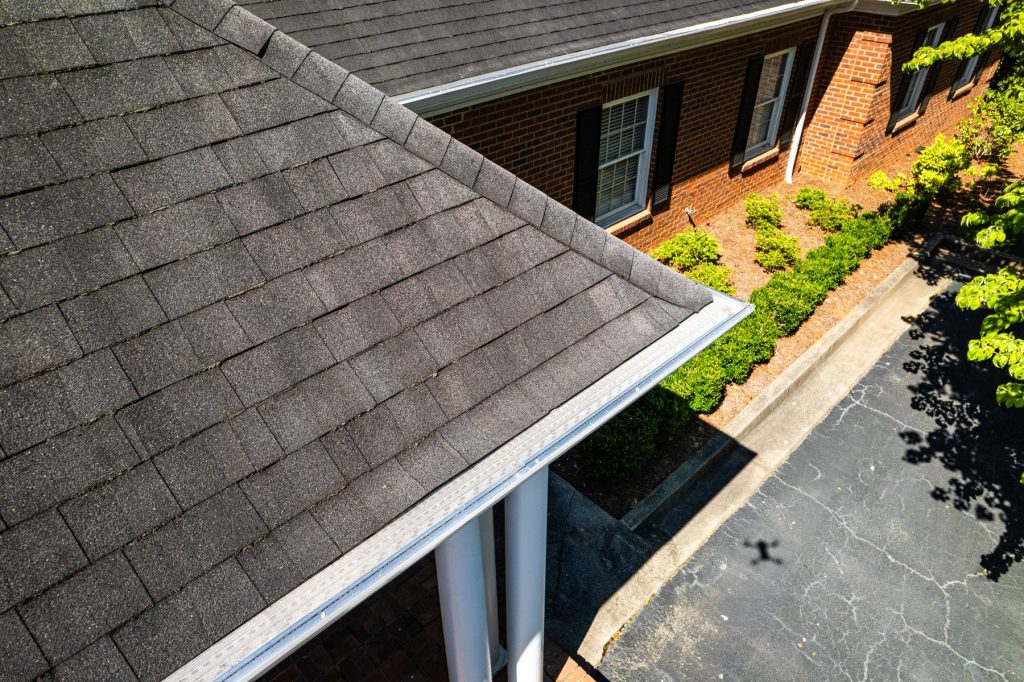
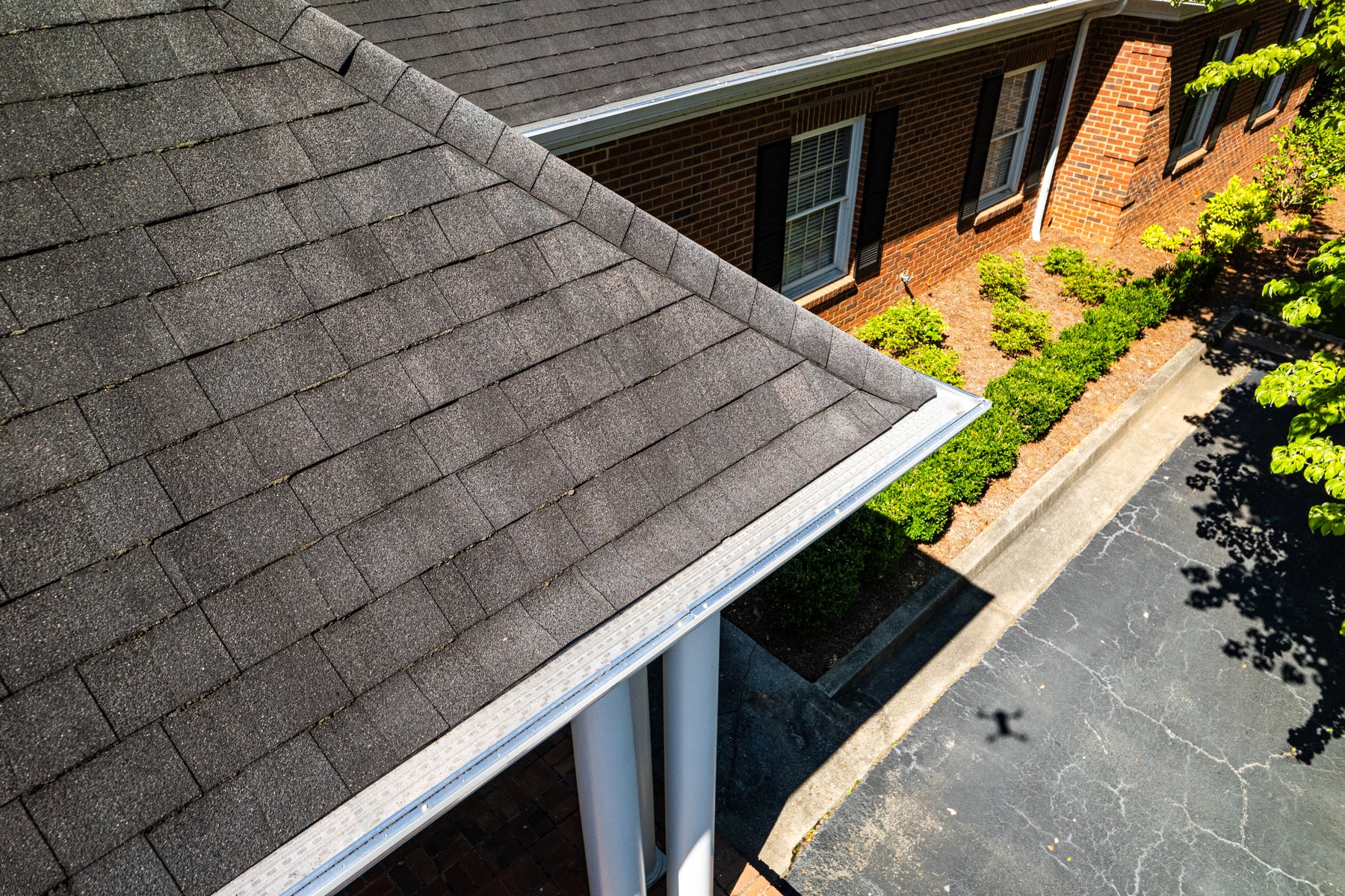
New white seamless gutters with guards installed along a roofline
Licensed & Insured◆Locally Owned & Operated in Tacoma◆Solutionists, Not Salespeople◆Seamless Gutters Made On-Site◆BroGuard Fine-Mesh Gutter Protection◆Free, No-Pressure Gutter Quotes◆Backed by 25+ Years of the National Brand◆Licensed & Insured◆Locally Owned & Operated in Tacoma◆Solutionists, Not Salespeople◆Seamless Gutters Made On-Site◆BroGuard Fine-Mesh Gutter Protection◆Free, No-Pressure Gutter Quotes◆Backed by 25+ Years of the National Brand◆

Most Tacoma homes land somewhere between $1,100 and $2,200 for a full seamless aluminum gutter replacement. That is third-party data, not a sales pitch: Homeblue puts seamless aluminum installation in Tacoma at $6.40 to $11.10 per linear foot, and a typical single-family home here carries 150 to 200 linear feet of gutter. Two-story access, 6-inch gutters, extra downspouts, rotted fascia, or gutter guards push that higher, sometimes past $4,000. Here is exactly what moves the number, and why two quotes on the same house can differ by $1,200.

Where Those Numbers Come From

No gutter company in this market publishes pricing, which is why searching “gutter installation cost Tacoma” sends you straight to a national lead-gen site. So let’s start with the public data.

Homeblue’s Tacoma figures put gutter installation at $5.30 to $11.70 per linear foot across all materials, narrowing to $6.40 to $11.10 for seamless aluminum. That works out to about $640 to $1,110 at 100 feet and $1,270 to $2,230 at 200 feet. Angi’s Seattle guide lands in the same neighborhood: $691 to $1,757 per project, averaging $1,223, with labor at $50 to $100 per hour.

Those ranges are wide on purpose. A rancher in South Tacoma and a two-story craftsman on North Slope aren’t the same job, even in identical materials. Here’s what separates them.

The Seven Things That Move Your Number

1. Linear Feet of Roofline

This is the base multiplier, and it isn’t the same as square footage. A compact two-story can have less gutter than a sprawling rambler with multiple roof planes, dormers, and a covered porch. Every extra roof plane adds an end cap, a corner, and often another downspout. Measure the roofline, not the house.

2. One Story vs. Two Story

Height is the biggest labor variable. Ground-level ladder work moves fast; second-story work means staging, longer setups, and a slower pace. At Angi’s $50 to $100 per hour, that time lands straight in your total. Add mature firs, tight side yards, or a hillside lot and access alone can shift a quote by several hundred dollars.

3. 5-inch vs. 6-inch gutter

Six-inch K-style holds roughly 40 percent more water than 5-inch and pairs with larger 3×4 downspouts. It costs more per foot, and in Tacoma’s kind of sustained winter rain it’s frequently the right call rather than an upsell, especially on steep roofs, large roof planes, or homes with a history of overflowing corners. Our 5-inch vs. 6-inch breakdown covers when the upsize is worth it.

4. Downspout Count, Size, and Where the Water Goes

This is where most quote-to-quote differences hide. Angi notes that moving from 2×3 to 3×4 downspouts raises cost while smaller ones lower it. A house needing seven downspouts costs meaningfully more than the same house quoted with four. The four-downspout version is also the one that overflows in November. Underground drainage away from the foundation is a separate line item again.

5. Fascia and Wood Repair

The most common surprise on a Pacific Northwest gutter job. Gutters that have been overflowing for years often hide soft, rotted fascia underneath, and new gutters can’t hang on wood that won’t hold a screw. Both Homeblue and Angi flag eave and fascia condition as a cost driver. A good contractor checks the fascia by hand before quoting; a cheap quote often just doesn’t look. See fascia board repair.

6. Tear-off and Haul-Away

Removing and disposing of your existing gutters is real labor and a real dump fee. Some quotes include it. Some quietly don’t. This one line item explains a surprising share of the gap between two bids on the same house.

7. Gutter Guards

Guards are priced separately, and they’re not a small add. Homeblue puts guard installation in Tacoma at $3.50 to $9.50 per linear foot, or roughly $610 to $1,660 on a 175-foot home, on top of the gutter. Under Douglas fir and big-leaf maple, plenty of Tacoma homeowners decide that math works. Others put the money toward a 6-inch gutter and clean twice a year. Both are defensible.

Seamless Gutter Cost in Tacoma, WA, By Material

Here is gutter replacement cost per linear foot by material, with what each works out to on a 175-foot home:

MaterialInstalled cost per linear footOn a 175-ft homeNotes
Vinyl$4.20 to $7.40 (Homeblue, Tacoma)$735 to $1,295Cheapest up front; sectional, not seamless, so more joints to leak
Seamless aluminum$6.40 to $11.10 (Homeblue, Tacoma)$4 to $7 (Angi, Seattle)$1,120 to $1,943The Tacoma default: rolled on site to one continuous length per run
Galvanized steel$8 to $9 (Angi, Seattle)$1,400 to $1,575Stronger under ladder and limb impact; can rust at cut ends over time
Copper$25 to $30 (Angi, Seattle)$4,375 to $5,250Historic and high-end homes; patinas, lasts decades
Gutter guards (add-on)$3.50 to $9.50 (Homeblue, Tacoma)$610 to $1,660Quoted on top of gutter, not instead of it

One more line that belongs in your budget: sales tax. Washington applies retail sales tax to labor as well as materials on work like this, and Tacoma’s combined rate is currently 10.5 percent, or about $189 on an $1,800 job. Rates vary by address across Pierce County, so confirm yours rather than assuming.

Why two quotes on the same house differ by $1,200

This is the part no cost calculator will tell you. When two contractors walk the same roofline and come back $1,200 apart, it’s almost never because one of them is greedy. It’s because they quoted two different jobs.

  • Tear-off and haul-away. One priced removal and disposal of the old gutter. One assumed you’d handle it, or planned to add it later.
  • Gutter size. A 5-inch quote and a 6-inch quote aren’t comparable. Neither are 2×3 and 3×4 downspouts.
  • Downspout count. Four versus seven changes material, labor, and whether the system keeps up in a Puget Sound downpour.
  • Fascia left as “TBD.” If rotted wood isn’t priced, it isn’t gone. It becomes a change order after the old gutter comes down.
  • Thickness and hanger spec. A .032 gutter on hidden hangers every 24 inches costs more than .027 on spikes every 36 inches. It also stays straight in year four.
  • Tax and disposal. In the total for one bidder, added at the end by the other.

The cheapest quote is very often the one missing the most scope. To compare bids honestly, ask every contractor for the same six things in writing: total linear feet, gutter size, downspout count and size, hanger type and spacing, whether tear-off and fascia repair are included, and whether sales tax is in the number shown. Once those match, a price difference is real information.

What about gutter cleaning?

Cleaning is a different budget entirely. Homeblue puts gutter cleaning in Tacoma at $0.60 to $1.10 per linear foot, or roughly $70 to $240 for a typical home: about $70 to $170 single story and $90 to $190 two story. In practice, published local minimums often start above those averages, and homes under heavy fir and maple cover need two visits a year, not one. Scope details are on our gutter cleaning page.

How we quote it

We won’t publish a flat price for your house, because a flat price for your house doesn’t exist until someone has looked at it. What we will do: measure the roofline, place downspouts based on where the water actually goes, put hands on the fascia before promising anything, and give you a written scope you could hold the next contractor to, with tear-off, guards, and tax broken out as their own lines instead of blended into one number.

If something we find changes the price, you hear it before we start, not after. See our gutter installation service, or request a free quote and we’ll come measure.

Frequently Asked Questions

How Much Do New Gutters Cost in Tacoma?

Most Tacoma homes run roughly $1,100 to $2,200 for a full seamless aluminum replacement, based on Homeblue’s Tacoma figure of $6.40 to $11.10 per linear foot and a typical 150 to 200 feet of roofline. Two-story access, 6-inch gutter, extra downspouts, fascia repair, or guards push it higher.

What is the Gutter Replacement Cost per Linear Foot?

Third-party data puts installed gutter in Tacoma at $5.30 to $11.70 per linear foot across all materials: about $4.20 to $7.40 for vinyl, $6.40 to $11.10 for seamless aluminum, $8 to $9 for galvanized steel, and $25 to $30 for copper. Guards add $3.50 to $9.50 per foot.

Is a 6-inch Gutter Worth the Extra Cost in Tacoma?

Often, yes. Six-inch K-style carries roughly 40 percent more water than 5-inch and pairs with larger 3×4 downspouts, which matters in Tacoma’s sustained winter rain. It’s most worth it on steep roofs, large roof planes, and homes that already overflow at the corners.

How Much Does Gutter Cleaning Cost in Tacoma?

Homeblue puts gutter cleaning in Tacoma at $0.60 to $1.10 per linear foot, or about $70 to $240 total, roughly $70 to $170 single story and $90 to $190 two story. Local minimums often start higher, and homes under heavy fir usually need two visits a year.

Licensed, Bonded & Insured  ·  Washington Contractor License #BRTHRBT745J1
5-Inch vs. 6-Inch Gutters: What 40 Inches of Tacoma Rain Actually Needs
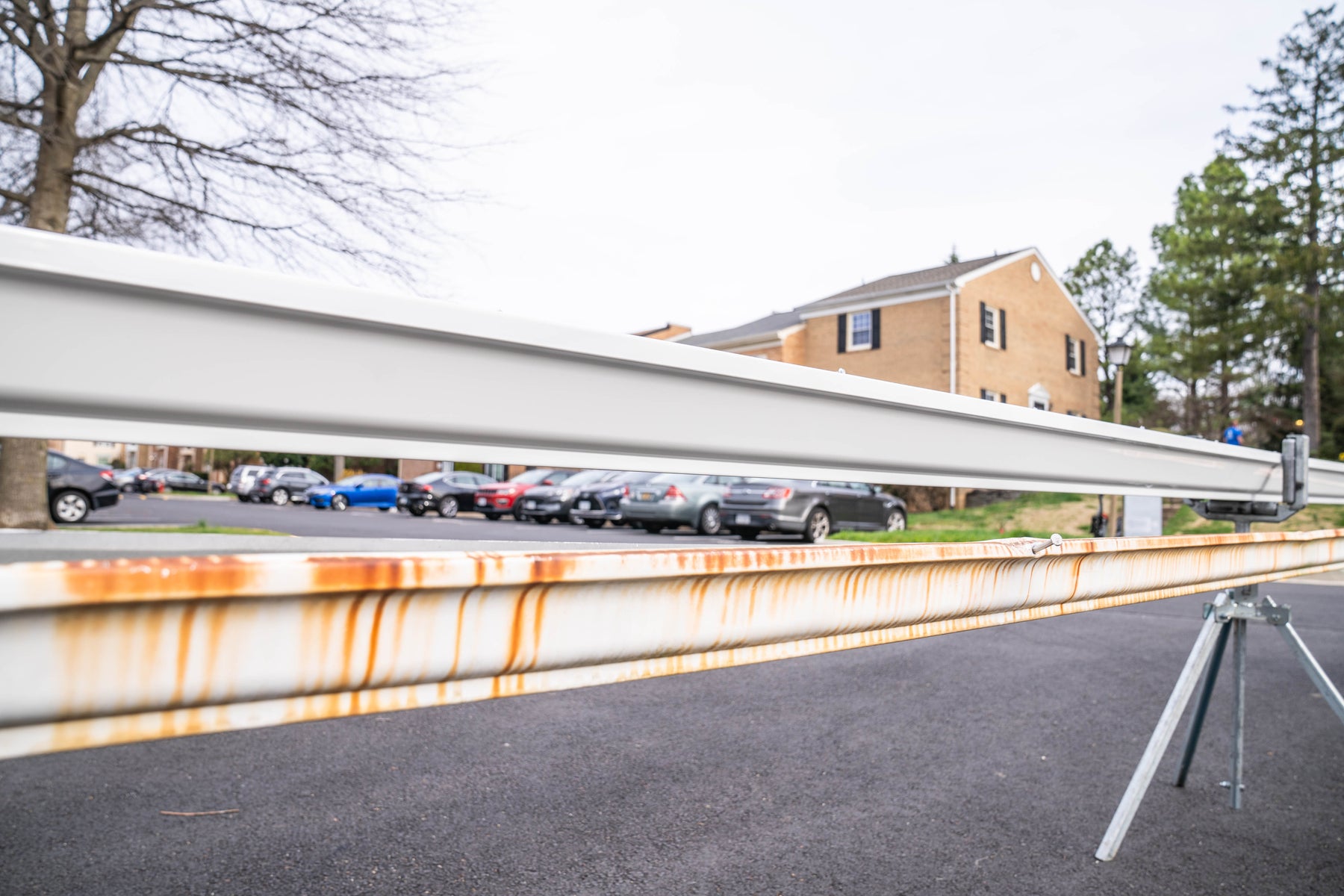
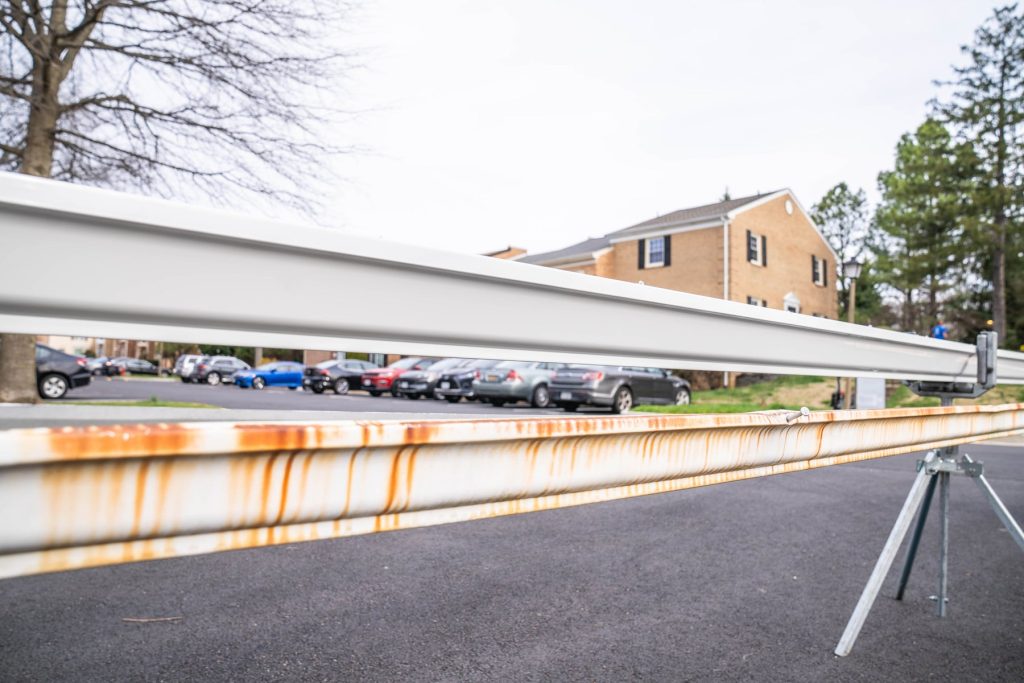
A new seamless gutter length next to an old rusted section for comparison
Licensed & Insured◆Locally Owned & Operated in Tacoma◆Solutionists, Not Salespeople◆Seamless Gutters Made On-Site◆BroGuard Fine-Mesh Gutter Protection◆Free, No-Pressure Gutter Quotes◆Backed by 25+ Years of the National Brand◆Licensed & Insured◆Locally Owned & Operated in Tacoma◆Solutionists, Not Salespeople◆Seamless Gutters Made On-Site◆BroGuard Fine-Mesh Gutter Protection◆Free, No-Pressure Gutter Quotes◆Backed by 25+ Years of the National Brand◆

Tacoma gets about 40.8 inches of rain a year, and most homes here handle it fine on standard 5-inch K-style gutters. The houses that genuinely need 6-inch have something specific going on: a large roof plane, a steep pitch, too few downspouts, or Douglas fir dropping needles into the trough all winter. Rainfall alone rarely decides it in Pierce County. Here is how the sizing works, and how to tell which house you have.

Start With the Local Math

Tacoma averages 40.8 inches of precipitation a year, a little wetter than Seattle’s 39.3, based on NOAA’s 1991 to 2020 climate normals. November is the wettest month at 6.5 inches.

Look closer at that November figure, though. Those 6.5 inches arrive across roughly 19 rainy days, about a third of an inch a day. Our rain is persistent, not violent. The City of Tacoma’s own surface water manual says the same thing: the 2-year design storm is 2.0 inches over 24 hours, and even a 100-year event is 4.1 inches over 24 hours.

That matters more than any other number here, because gutter capacity is a question of inches per hour, not inches per year. A Gulf Coast thunderstorm drops two inches in an hour; here, two inches takes a day. Which is why 5-inch is honestly enough for a lot of Tacoma homes, provided it is clean, correctly pitched, and has enough downspouts.

Roof Area Is the Real Variable

Gutters are sized to the roof area draining into them, not to the square footage of the house. A 5-inch K-style gutter holds roughly 1.2 gallons per linear foot; a 6-inch holds about 2.0 gallons, close to 65 percent more. At the one-inch-per-hour intensity these charts assume, a 5-inch run is rated for about 5,500 square feet of roof and a 6-inch for about 7,960.

Those numbers look generous until you divide the roof up, because what counts is the area feeding each run. One long gutter catching a wide roof plane with one downspout at the far end is a different job than the same footage split across four runs. It is why two houses of identical size can need different gutters.

Pitch Multiplies the Load

A steeper roof behaves like a bigger roof. The standard adjustment factors:

  • Flat to 3/12 pitch: no adjustment
  • 4/12 to 5/12: add 5 percent
  • 6/12 to 8/12: add 10 percent
  • 9/12 to 11/12: add 20 percent
  • 12/12 and steeper: add 30 percent

The charts miss a second effect. On a steep roof, water leaves the edge with real momentum and can shoot straight over a narrow trough. That is not an overflow problem, it is an aim problem, and cleaning will never fix it. A 6-inch trough catches what a 5-inch throws past.

Why a Perfectly Clean 5-Inch Gutter Still Overflows

This is the part homeowners find maddening: cleaned in September, spilling over the front edge in November anyway. Usually one of three things is happening.

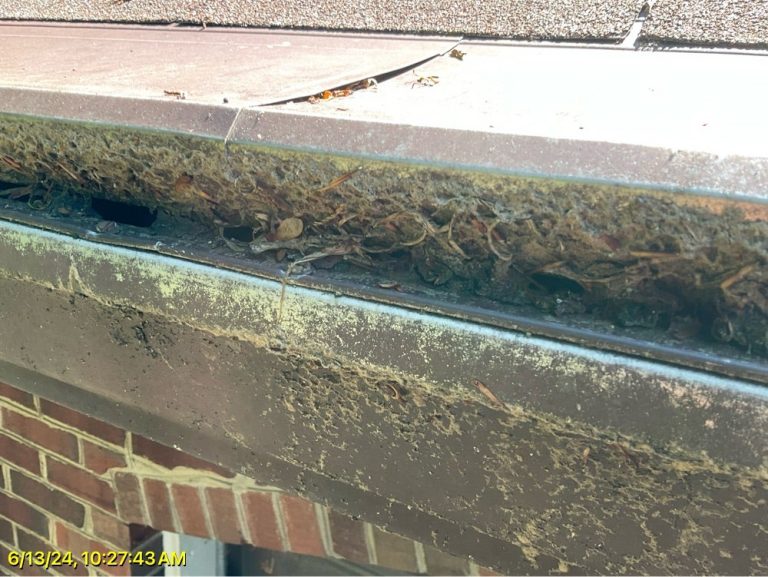
The trough is losing cross-section to debris. Under Douglas fir and big-leaf maple, needles and seed pods pack into a dense mat. A 5-inch gutter with an inch of packed needles has lost a large share of its capacity, and it did not take long. A 6-inch gutter under the same tree still has usable depth. In Tacoma, debris tolerance is the most common real reason to size up, not rainfall.

The water is concentrated at one point. Roof valleys funnel a large area into a narrow stream that hits the gutter in one spot. That spot overflows while the rest of the run sits half empty.

Or the outlets cannot keep up, which brings us to the part that gets ignored.

Downspout Size: 2×3 vs. 3×4

A gutter is a holding channel. Downspouts are the drain. Get the drain wrong and the size of the channel stops mattering.

A 2×3 inch downspout handles roughly 600 square feet of roof. A 3×4 handles about 1,200, roughly double. One downspout per 40 feet of run is the common minimum, and under heavy tree cover every 30 feet is the better target. Valleys and inside corners usually justify one of their own.

Here is the pairing that matters: 6-inch gutters on 2×3 downspouts create a bottleneck. The trough fills faster than the outlets can empty it and you have paid for capacity you cannot use. Six-inch belongs on 3×4. That is why the two upgrades are quoted together.

A Gutter Sizing Guide for Tacoma Homes

Roof area feeding one gutter runPitchTypical Tacoma callDownspouts
Under 1,200 sq ftUp to 6/125-inch K-style2×3, one every 30 to 40 ft
1,200 to 2,500 sq ftUp to 6/125-inch is usually fine3×4, or more 2×3 outlets
1,200 to 2,500 sq ftSteeper than 6/125-inch, or 6-inch under conifers3×4
2,500 to 4,000 sq ftAny6-inch K-style3×4, one every 30 ft
Over 4,000 sq ft, or commercialAny6-inch, sometimes 7-inch3×4 or larger

Treat this as a starting point, not a verdict. Tree cover, valley placement, and fascia condition can all move a house a row in either direction.

When 5-Inch Is Still the Right Answer

Plenty of Tacoma homes do not need the upgrade, and we would rather tell you that than sell it. A one-story or modest two-story with roof planes under about 1,200 square feet, a moderate pitch, enough downspouts, and no conifer overhead will do fine on 5-inch seamless aluminum for decades.

And 6-inch will not fix the wrong problem. If gutters overflow because the pitch is off, the hangers loosened, or there are three downspouts where there should be six, a wider trough just gives the water a bigger place to sit. Correcting slope, adding outlets, rehanging on hidden hangers, or adding gutter guards is often the better use of the same money. Diagnose first.

One Detail Nobody Local Talks About

One piece of metal matters almost as much as gutter size and almost never comes up in a quote: the gutter apron. It is the flashing that carries water off the roof edge into the trough instead of letting it wick backward onto the fascia. Without it, you can get rot behind a gutter that drains perfectly. It deserves its own post, and we will give it one.

How We Size It

We measure the roof planes, note the pitch, count the valleys, look up at what is growing over the house, and then recommend a size. Often that recommendation is 5-inch, and we say so. For the money side, our guide to what new gutters cost in Tacoma covers what the size decision does to the price.

When you are ready, see our gutter installation service or request a free quote.

Frequently Asked Questions

What Size Gutters Do I Need?

Most homes need 5-inch K-style gutters. Step up to 6-inch when a single gutter run drains more than about 2,500 square feet of roof, the pitch is steeper than 6/12, or heavy conifer debris keeps cutting into the trough’s capacity. The roof area feeding each run matters more than the size of the house.

Are 6-Inch Gutters Worth It for Heavy Rain in Tacoma?

Sometimes, but rainfall intensity is rarely the reason here. Tacoma’s 40.8 inches a year arrive at moderate intensity, spread across many days. The stronger local arguments for 6-inch are large or steep roof planes and constant fir and maple debris, which eats into a 5-inch trough’s usable depth much faster.

What Is the Difference Between 2×3 and 3×4 Downspouts?

A 2×3 downspout drains roughly 600 square feet of roof and a 3×4 drains about 1,200, close to double. A 3×4 also clogs less readily on needles and seed pods. Six-inch gutters should always be paired with 3×4 downspouts, otherwise the outlets bottleneck the extra trough capacity.

Are K-Style Gutters a Good Choice in Tacoma, WA?

Yes, and they are the standard here. K-style holds significantly more water than a half-round of the same nominal width, which is why a 5-inch K-style is rated for roughly twice the roof area of a 5-inch half-round. Half-round is mainly chosen on historic homes for appearance.

Licensed, Bonded & Insured  ·  Washington Contractor License #BRTHRBT745J1