

Quick answer
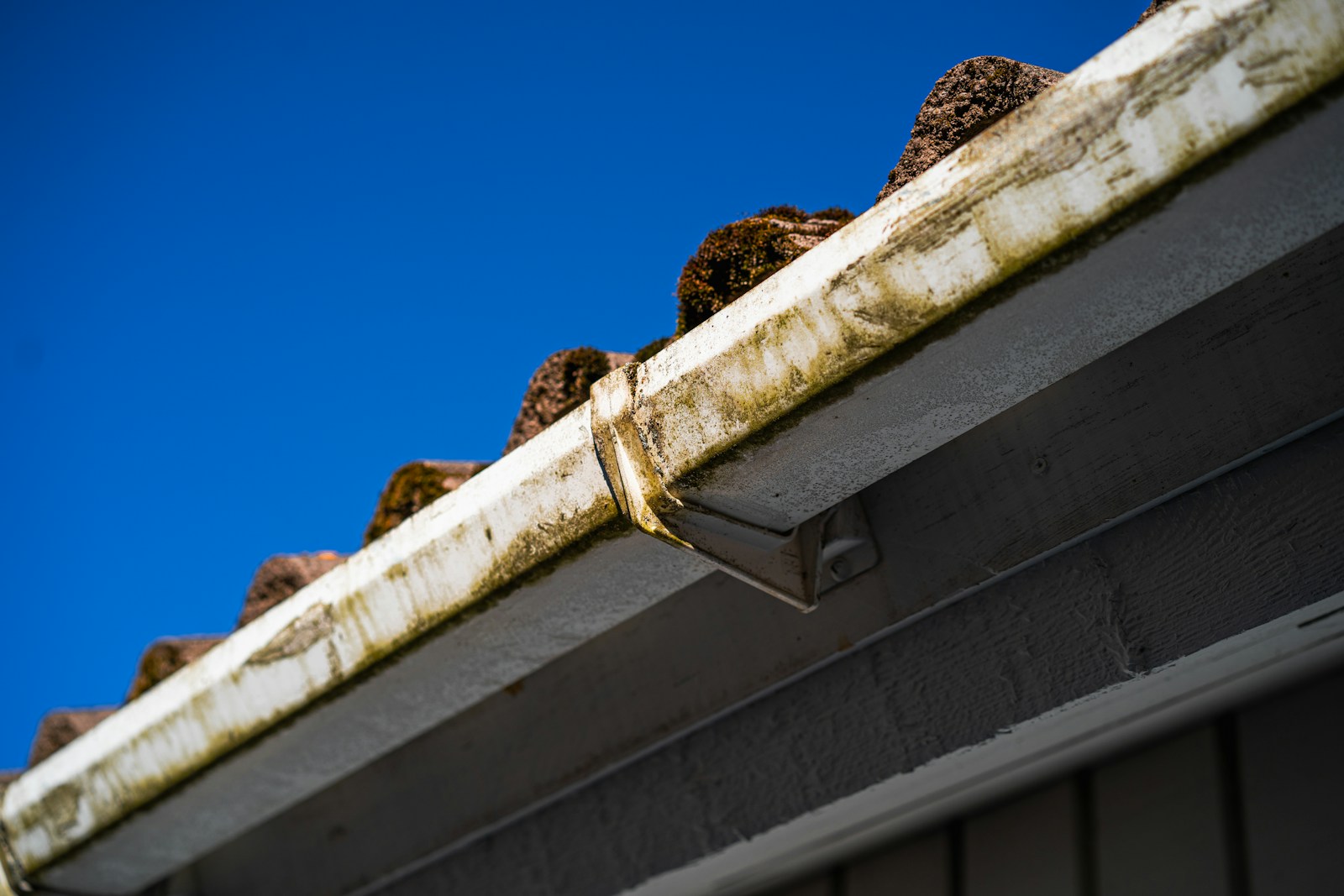
Why is my gutter leaking in Tacoma? Most gutter leaks that show up in the first fall rains come from aged sealant at the joints, corners, end caps and downspout outlets, or from water running behind the gutter because the roof edge, the pitch or the hangers are off. Watch a steady rain from the ground, note exactly where the water comes out, and have the cause fixed on a dry day instead of climbing a wet ladder. Call (253) 777-1572 or get a free repair estimate.
The first real rain
Why gutter leaks show up in October
A gutter can look fine all summer. The first week of steady rain is the real test.
NOAA’s daily records for the Tacoma No. 1 weather station put average September rain at about 1.5 inches over 1991 to 2020. October averages about 4.1 inches, nearly three times as much, and November climbs to about 6.3 inches, the wettest month of the year. Roughly three quarters of the year’s 40 or so inches falls between October and March.
October is when small problems show. Sealant at the joints has spent a summer in the sun, a loose hanger has let a run drift out of pitch, and the needles and moss from the dry months pack into a wet mat at the outlets.
Most leaks are small and fixable, and the first rains are the easiest time to find them. If your gutters spill over along the whole run instead of dripping in one spot, that is usually a capacity question, and our post on 5 inch vs 6 inch gutters covers it.
From the ground
How to find a gutter leak without getting on a ladder
The best leak inspection happens during a steady rain, from the ground, with a phone in your hand.
You do not need to climb anything to find most leaks. Wait for a steady daytime rain, put on a jacket and walk the house slowly.
- Start at one corner.Walk the whole house in one direction, back side included, so you do not skip a run.
- Look at the underside of the gutter.Drips along the bottom edge show where a joint, corner or hole is letting go.
- Look behind the gutter.Water falling between the gutter and the wall, or dark streaks on the wood below, means water is getting behind it.
- Check corners, end caps and outlets.These are joints on every system, including seamless gutters, and where sealant gives out first. Water spilling right above an outlet points to a plug just inside.
- Follow each downspout to the ground.Look for spray from elbows and water pooling against the foundation.
- Take photos and short videos.A ten second clip of each drip tells a repair crew more than any description.
If water is pouring off the house in a big storm, do not try to fix it then. Wet rungs and a mossy roof edge do not mix. Our atmospheric river gutter prep guide covers what to do before and after the big storms.
Read the drip
What each kind of gutter leak is telling you
Where the water shows up usually tells you why. Here is how we read it on South Sound homes.
| Where you see water | What usually causes it | What usually fixes it |
|---|---|---|
| A drip every 10 feet or so | Sectional gutter, which comes in 10-foot pieces joined with connectors and sealant that ages out | Reseal if the rest is sound; seamless gutters if joint after joint leaks |
| A drip at an inside or outside corner | The corner seal has cracked, often because the run shifted | Clean to bare metal and reseal on a dry day |
| Water around the downspout outlet | A failed outlet seal or debris packed just inside | Flush the downspout, then reseal or replace the outlet |
| Water between the gutter and the wall | Water wicking back under the roof edge, a missing gutter apron, or a gutter hung too low | Add the apron and rehang the run |
| Water over the front edge in one spot | A run that lost its pitch, a loose hanger or a valley dumping into one place | Re-pitch on new hidden hangers, or add an outlet |
| A drip mid-run with no joint nearby | A rust hole, an old spike hole or limb damage | Patch it, or replace the section if the metal is thin |
Water behind the gutter is the one to take seriously
Water running behind the gutter soaks the fascia, the wood the gutter hangs on, and in a climate where roof edges stay wet from fall into spring, that wood can stay damp for months. That is how hangers lose their grip and runs start to sag.
The usual fix is a gutter apron, the flashing that carries water off the roof edge into the trough so it cannot wick back. Our post on gutter sizing explains why it matters as much as gutter size. If the wood behind the gutter has gone soft, that has to be dealt with first, or new hangers will not hold.
Sometimes it is not a leak at all
A gutter packed with needles and moss spills over the front or back edge and can look a lot like a leak. If the trough has not been cleaned since last fall, start there. Our gutter cleaning crews clear the trough, flush and test every downspout and report what they noticed, which often answers the leak question too.
Before the fix
What you can safely do yourself, and what to leave for a dry day
Some of this is a five minute job from the ground. The rest needs a ladder and dry metal.
From the ground, any time
- Put the downspout extension back. A splash block knocked loose by the mower sends water straight at the foundation.
- Clear the bottom of the downspout. If you can reach the bottom elbow, pull out packed needles.
- Write down every spot. With photos, so the repair happens in one visit.
Wait for dry weather and good footing
Resealing a joint only works on clean, dry metal, and rehanging a run is a dry-day job from a ladder on firm, level ground. If you would rather not be up there during a Tacoma fall, that is exactly the work our gutter repair crews do, and most repairs are finished in one visit.
Then make sure the water lands in the right place
Once water leaves the gutter, it should land away from the house. Our guide to downspout drainage in Tacoma covers where downspouts should drain, and our rain garden guide covers putting roof water to use in the yard. On a repair visit we reattach loose downspouts and handle downspout extensions and redirects when one is dumping against the foundation.
Repair or replace
Should you repair a leaking gutter or replace it?
One leak is a repair. A pattern of leaks around the whole house is a different conversation.
Repair is the right call when the system is basically sound: seamless gutters with a leaking corner, a sag or a loose downspout. Replacement makes sense when a sectional gutter leaks joint after joint, old spike and ferrule hangers are pulling out along several runs, or the gutter is too small for the roof. We will not talk you into a new system you do not need.
Why the joints are the whole story
Sectional gutter from a home store comes in 10-foot pieces, so a 40-foot run has three joints in the middle, each one relying on sealant to stay watertight through a wet winter. Seamless gutters are formed on our truck in your driveway, one continuous piece for each section of roofline, so the only joints left are at the corners and downspout outlets, where a crew can build and seal them properly. Properly maintained, they should last well over 20 years.
What a leak repair visit looks like
- Find the cause.A Solutionist checks pitch, hangers and outlets, not just the drip.
- Fix the joint.Corners, end caps and outlets are cleaned to bare metal and resealed, or replaced.
- Correct the pitch.Sagging runs are rehung on new hidden hangers.
- Flush and test.Every downspout is flushed and the system tested.
- Tell you straight.If a section is past saving, you hear it plainly.
A spring look at seams, hangers and rust spots in April or May catches small problems early, and our maintenance program builds that in. Jamie and Zeke Edwards own and run the business here, and we are a licensed Washington contractor. We repair gutters across Tacoma, University Place, Puyallup, Federal Way and Bonney Lake.
Found a drip in the first fall rain? Call (253) 777-1572
Get a Free EstimateA quick tip: during the next steady rain, take a short video at each corner and every downspout. Show it to your Solutionist and the crew knows where to look before the ladder comes off the truck.
Frequently Asked Questions
Most seam leaks come from sealant that has aged out. Sectional gutter is joined every 10 feet with connectors and sealant, and years of wet winters, summer sun and metal moving with the temperature break that seal down. A single dripping seam can usually be cleaned and resealed on a dry day. If joints are leaking all around the house, seamless gutters remove the mid-run joints entirely.
Usually because water is wicking back under the roof edge instead of dropping into the trough, often where there is no gutter apron, or because the gutter is hung too low or leans toward the house. A packed trough can also spill out the back. Water behind the gutter soaks the fascia the gutter hangs on, so it is worth fixing before the wettest months arrive.
Not well. Sealant needs clean, dry metal to hold, and a wet roof edge covered in moss and needles is a poor place for a ladder. During the rain, the best move is to note where the water appears and take photos or video from the ground. The repair itself happens on the next dry day, and most repairs are finished in one visit.
Not by itself. One leaking corner, end cap or outlet on sound seamless gutters is a repair. Replacement starts to make sense when a sectional gutter leaks joint after joint, hangers are pulling out along several runs, or the gutter is too small for the roof. A Solutionist will tell you which one you are looking at and leave a free written estimate.
On the first dry day after you find them. NOAA records for the Tacoma No. 1 station average about 4.1 inches of rain in October and about 6.3 inches in November, so a small October drip is carrying a lot more water a month later. A spring check in April or May then catches anything the wet season loosened.
Free estimates
Found a gutter leak in the first fall rain?
Free, no-pressure written estimates from local Solutionists. We find where the water is really coming from, fix it on a dry day and tell you honestly whether a repair will hold or a section needs replacing.
The Brothers That Just Do Gutters · Tacoma · (253) 777-1572 · Serving Tacoma, WA and the South Sound
Licensed, Bonded & Insured · Washington Contractor License #BRTHRBT745J1