Category: Gutter Cleaning

Are Gutter Guards Worth It in Tacoma? A Straight Answer for Fir and Cedar Country

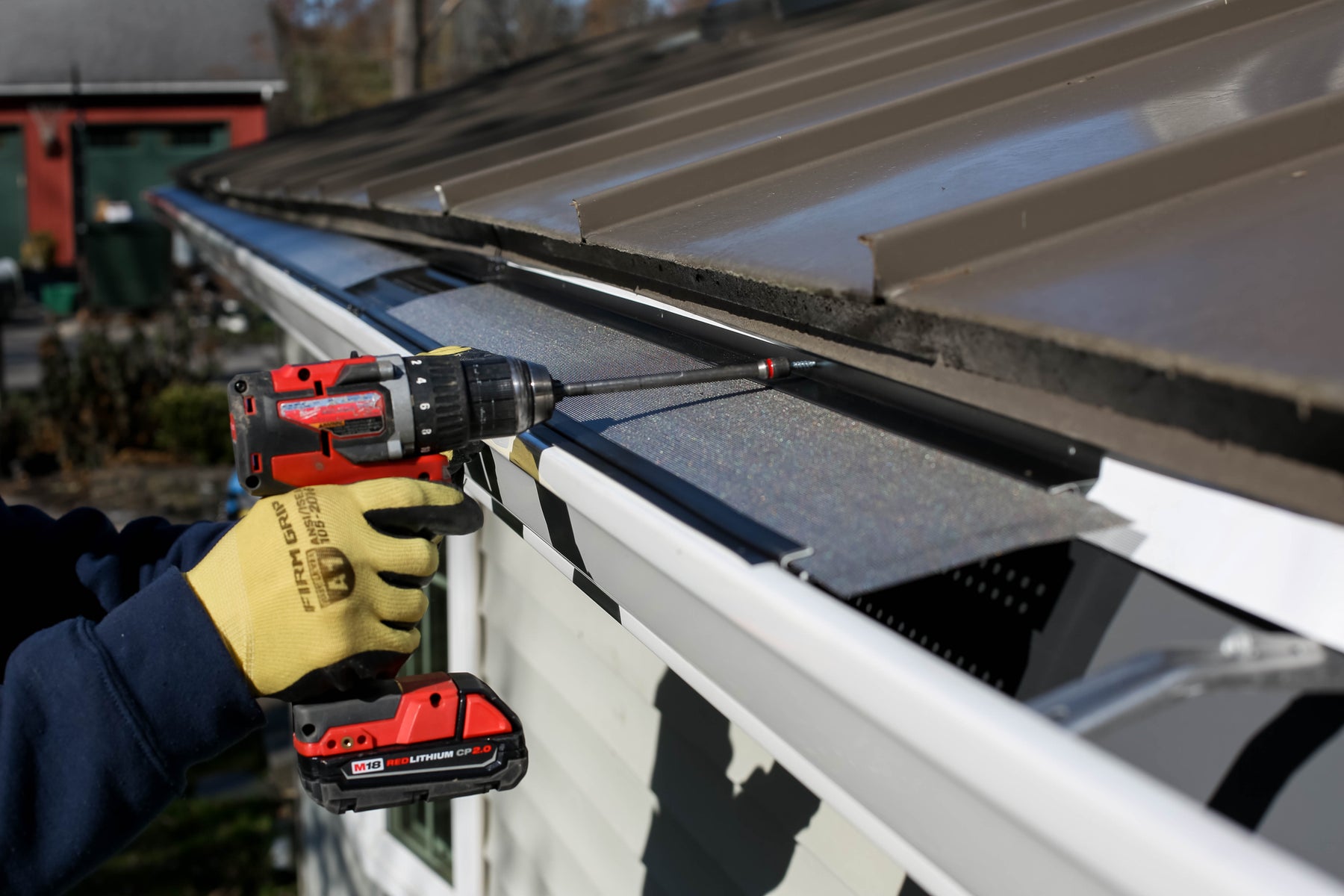
Installer fastening a fine metal mesh gutter guard with a drill

For most Tacoma homes with firs or cedars over the roof, yes, a good fine mesh gutter guard is worth it. Needles drop here all year, not just in fall, and a guard that stops them can take you from two or three cleanings a year down to an occasional check. But not every guard handles needles, and not every house needs one. Here’s how to tell whether yours does, which types actually work in the South Sound, and what they cost.

Why Tacoma Is a Different Problem

Most gutter guard advice is written for leaf country, where one big fall drop is the whole story. The South Sound isn’t that. Douglas fir, western red cedar and hemlock shed needles and cedar sprays every month of the year. Big-leaf maple adds seed and blossom in spring. And with roughly 37 to 40 inches of rain a year falling mostly from October through March, the roof stays damp long enough for moss to grow, dry out, break loose and wash into the gutter.

Put that together and you get a fine, dense mat of needles, moss and roof grit that packs into the trough and plugs the downspout outlet. That’s why a guard that works fine on an oak lot back east can fail completely under a Tacoma fir. For a closer look at what’s actually filling gutters here, see what clogs gutters in Tacoma.

How Each Type of Guard Handles Needles

Guard typeInstalled cost per linear foot in TacomaHow it does with fir and cedar needles
Vinyl or PVC screen$3.50 to $4.60Openings are big enough for needles to slip through or wedge in. Plastic also gets brittle with age.
Perforated aluminum$3.80 to $4.60Better than vinyl, but needles still poke into the holes and stand up, catching more debris on top.
Foam inserts$5.60 to $6.40Sits inside the gutter and holds moisture. Needles stick in the top, and in our climate the foam can start growing its own moss.
Brush inserts$5.60 to $6.40Needles tangle in the bristles, and the brushes have to be pulled out to clean.
Solid surface or reverse curve$6.60 to $9.50Relies on water curling over a lip. Needles and moss can build up on that lip, and heavy, sustained rain can overshoot it.
Micro mesh$4.80 to $5.60Openings too fine for needles to get through. Water passes, debris stays on top where it usually dries and blows off.

Cost figures are from HomeBlue‘s Tacoma gutter guard data, published in 2022, so treat them as a floor rather than a current quote. The pattern still holds: the cheapest guards are the ones that handle needles worst.

What It Costs, and When It Pays for Itself

On a typical 175-foot home, HomeBlue’s micro mesh range works out to about $840 to $980 installed, and the full range across guard types runs roughly $610 to $1,660. Compare that with cleaning. HomeBlue puts gutter cleaning in Tacoma at roughly $70 to $240 per visit, and a house under firs usually needs two or three visits a year to stay ahead of the needle drop.

That’s the math most homeowners end up doing. If you’re under heavy tree cover and cleaning two or three times a year, a quality mesh guard can pay for itself within a few years. And that’s before you count the fascia, siding and foundation damage that a clogged gutter causes through a wet winter, or the ladder climbs you stop making.

When a Gutter Guard Isn’t Worth It

A guard isn’t the right answer for every house, and we’ll tell you when it isn’t.

  • Your lot is open, with no trees near the roofline. One fall cleaning may be all you need.
  • Your gutters are undersized, sagging or leaking. Putting a guard on a failing system just hides the problem. Fix or replace the gutter first.
  • The fascia behind the gutter is soft. The guard adds a little weight and covers the gutter, so the wood needs to be sound before anything goes on top.
  • Your downspouts dump against the foundation. A guard keeps the gutter clear, but it doesn’t change where the water lands. That’s a drainage question.

Do Guards Mean You Never Touch Your Gutters Again?

No, and anyone who promises that is overselling. A good micro mesh guard dramatically cuts how often your gutters need attention, because needles and leaves stay on top instead of packing into the trough. Most of that debris dries and blows off. But in shady spots, moss can still grow on top of any guard, and fine roof grit can settle underneath over time. A yearly look, and a light brushing where debris collects, keeps everything flowing. See our post on moss in gutters for more on the moss side of it.

What We Install in Tacoma

We install BroGuard, an all-metal micro mesh gutter guard built for exactly this kind of debris. It keeps fir and cedar needles, maple seed and moss out of the gutter while South Sound rain flows through, and it’s covered by the BroGuard warranty. A Solutionist will look at your trees, your roof and the condition of your gutters, then tell you straight whether guards make sense for your house. Call (253) 777-1572 or request a free estimate online.

Frequently Asked Questions

Are gutter guards worth it in Tacoma?

For homes with firs or cedars over the roof, usually yes. Needles fall year-round in the South Sound, and a fine micro mesh guard can cut cleanings from two or three a year to an occasional check. On open lots with few trees, a single fall cleaning is often enough and a guard may not pay off.

What is the best gutter guard for pine and fir needles?

Micro mesh. Its openings are too fine for needles to get through, so debris stays on top instead of packing into the gutter. Screens, perforated aluminum, foam and brush inserts all let needles lodge in or through them.

How much do gutter guards cost in Tacoma?

HomeBlue’s Tacoma data puts installed gutter guards at $3.50 to $9.50 per linear foot depending on type, with micro mesh at $4.80 to $5.60. On a typical 175-foot home, that’s roughly $840 to $980 for micro mesh.

Do gutter guards stop moss?

They keep moss clumps that wash off the roof out of the gutter, which is where most moss problems start. In shady spots moss can still grow on top of a guard, so a yearly check and a light brushing keeps the mesh clear.

Licensed, Bonded & Insured  ·  Washington Contractor License #BRTHRBT745J1
Moss in the Gutters, Not Just on the Roof: A Western Washington Problem

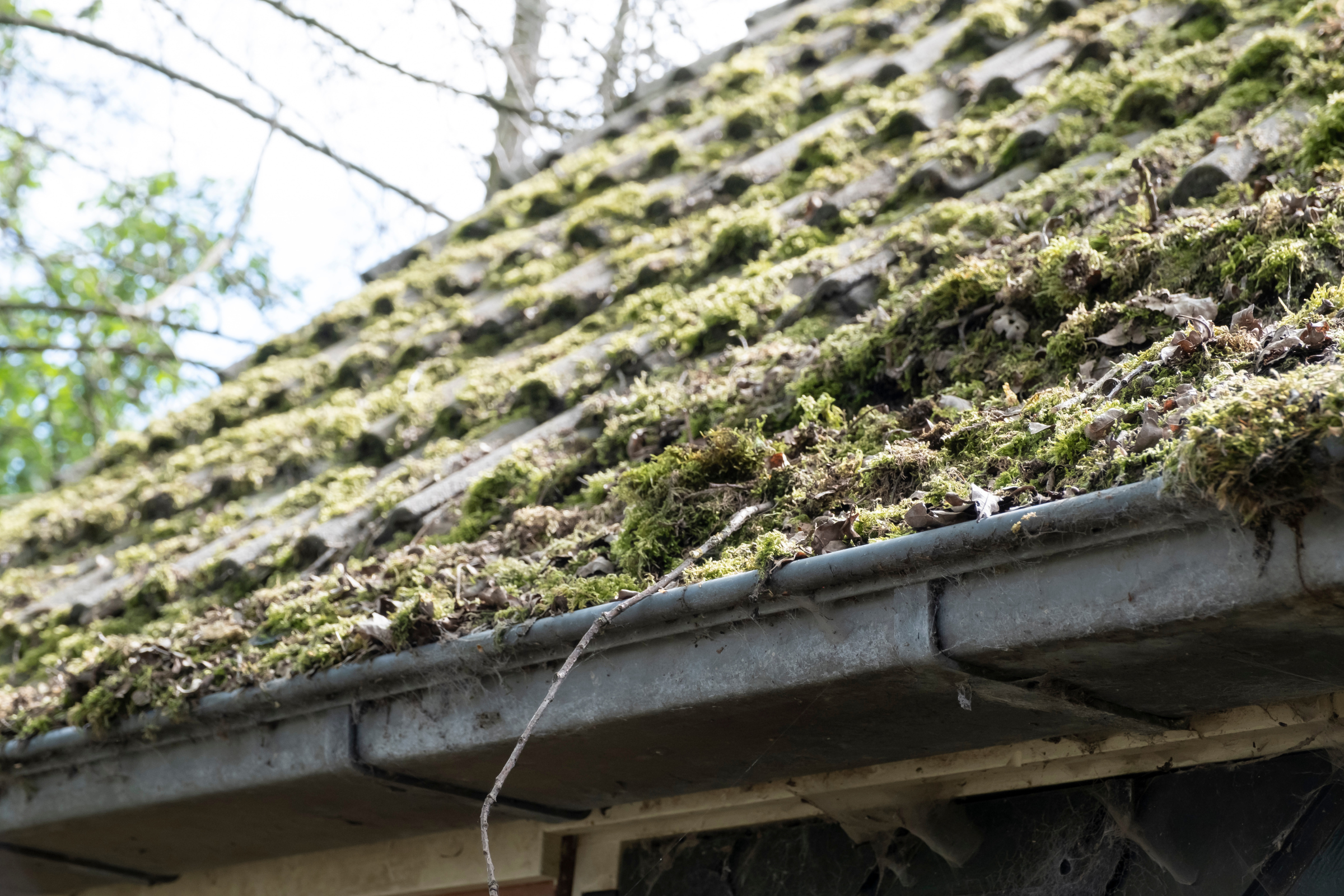
Moss growing on a roof and spreading into the gutter
Licensed & Insured◆Locally Owned & Operated in Tacoma◆Solutionists, Not Salespeople◆Seamless Gutters Made On-Site◆BroGuard Fine-Mesh Gutter Protection◆Free, No-Pressure Gutter Quotes◆Backed by 25+ Years of the National Brand◆Licensed & Insured◆Locally Owned & Operated in Tacoma◆Solutionists, Not Salespeople◆Seamless Gutters Made On-Site◆BroGuard Fine-Mesh Gutter Protection◆Free, No-Pressure Gutter Quotes◆Backed by 25+ Years of the National Brand◆

Everyone in western Washington knows about roof moss. Fewer people think about the moss growing in the gutter itself, which is a separate problem with a separate fix. Moss in gutters is not debris sitting on top of the trough, it is a living mat holding water in the bottom of it, and it behaves differently from needles or leaves. Here is why it grows so well here, what it actually does once it is established, and the honest line between a gutter job and a roof job.

Why It Grows So Well Here

Moss is not a sign that something went wrong. It is a sign you live in the right climate for it.

WSU’s Hortsense program, writing about moss generally, notes that mosses “grow vigorously in the cool, moist weather of fall, winter, and spring.” That single sentence explains the whole seasonal pattern homeowners experience. Moss does its real growing in exactly the months Tacoma is wet and cool, and our dry summers give it a long pause.

Which is why the moss you notice in October or February seems to have appeared out of nowhere. It did not. It grew through the previous wet season, went quiet during the dry months when nobody was looking up, and started expanding again the moment the rain returned. If you inspect gutters in July, you are inspecting them at the low point of the moss year.

Hortsense also lists what favors moss: heavy shade, poorly drained conditions, and acidity, among others. A north-facing gutter run under a conifer, holding a layer of decomposing needles, is close to an ideal habitat. That is not bad luck, it is a checklist.

What Moss Does Inside a Gutter

Three things, and none of them are the things people worry about.

It holds water. Moss is structurally good at retaining moisture, which is the opposite of what you want in a channel whose entire job is moving water out. A mossy trough stays wet between storms instead of draining and drying.

It blocks flow. A moss mat in the bottom of a gutter does what a fir needle mat does, but worse, because it is anchored and growing rather than loose. Water runs across the top of it and over the front lip. This connects directly to the sediment layer we covered in our guide to what fills Tacoma gutters: moss fragments, roof grit, and shingle granules combine into a dense base layer that no guard system stops.

It adds weight, permanently. Wet moss plus trapped sediment is heavy, and unlike leaves it never dries out and lightens between storms. That constant load is what loosens hangers and pulls runs out of pitch, which then causes standing water, which then grows more moss. The loop closes on itself.

The thing homeowners usually ask about, whether moss is eating the metal, is the least of it. Aluminum does not rot. The real damage is permanent moisture at seams and cut ends, added weight, and a run that has quietly lost its slope.

What It Does on the Roof, Which Is a Different Job

Roof moss matters, and the research on it is clear. Oregon State University Extension notes that moss on a roof “traps soil and debris, holding moisture and extending the time wood roofs remain wet,” which “invites fungi, speeds decomposition and shortens roof life.” On asphalt and metal roofs, OSU says moss “can lift shingles and allow water to penetrate and damage underlying layers.”

That is a roofing problem with roofing consequences. OSU also cautions that improper pressure washing technique can damage shingles, and suggests a long-handled brush or a professional instead of blasting at it.

Here is our position, plainly. We are a gutter company. We clear moss and debris out of the gutter run and downspouts, and we will tell you what we can see of your roof from the ladder. We are not the right people to treat, brush, or wash a mossy roof. Anyone searching for roof moss removal in Tacoma should be talking to a roofing or roof-cleaning specialist whose actual trade that is. The two jobs get sold together constantly and they are not the same skill. Walking a wet, mossy roof is how people get hurt.

The Part About Runoff, Which Is Our Business Too

This is where a gutter company genuinely has something to add, and it comes in two halves.

First, a warning specific to gutters. OSU cautions against using zinc sulfate products where a roof has copper gutters, downspouts, or flashing, because zinc corrodes copper. If you have copper gutters, a moss treatment applied to the roof above them can quietly damage a very expensive gutter system. Ask before anyone treats your roof.

Second, the water quality issue. Whatever gets applied to a roof ends up in the gutter, then the downspout, then wherever your roof water goes. The Washington Department of Ecology reports that copper and zinc “are among the most common pollutants found in Puget Sound,” that zinc is “toxic to fish and plants,” and that in its breakdown of zinc in urban runoff, “moss control is the biggest slice of the pie.” Not tires, not roofing metal. Moss control. Seattle Public Utilities adds that moss killers containing zinc or copper sulfates “are toxic to aquatic life and are not biodegradable,” and that users “should be careful to avoid runoff of materials into storm drains or surface water.”

The upshot is not that you should tolerate moss. It is that how it comes off matters. Physically clearing a gutter and bagging the material keeps it out of the storm system entirely. Chemical treatment on the roof above, rinsed into gutters that discharge to a storm drain, is the version with a downstream cost, and Tacoma’s surface water system runs to Commencement Bay.

If your gutters need clearing, our gutter cleaning service removes moss and debris from the trough and downspouts by hand and hauls it away, and flags the loosened hangers and lost pitch that a moss load tends to leave behind.

Frequently Asked Questions

Why Is Moss Growing in My Gutters?

Because your gutters offer exactly what moss wants. WSU notes that moss grows vigorously in the cool, moist weather of fall, winter, and spring, and that shade, poor drainage, and acidity all favor it. A shaded gutter run holding decomposing needles and standing water is close to ideal habitat, which is why north-facing runs under conifers are usually the worst.

Does Moss Damage Gutters?

Indirectly, yes. Moss does not eat aluminum, but it holds moisture against the metal permanently, which promotes corrosion at seams and cut ends. It blocks flow so water runs over the front lip, and its weight, which never dries out, loosens hangers and pulls runs out of pitch. The lost slope then creates standing water, which grows more moss.

Is Moss Removal Part of Gutter Cleaning?

For the gutters themselves, yes. Clearing moss out of the trough and downspouts is part of a proper cleaning, and the material should be bagged rather than rinsed into the storm system. Treating moss on the roof is a different trade and a different skill set, and it belongs to a roofing or roof-cleaning specialist rather than a gutter crew.

Licensed, Bonded & Insured  ·  Washington Contractor License #BRTHRBT745J1
The Tacoma Rain Calendar: How Long You Actually Have Before Your Gutters Matter

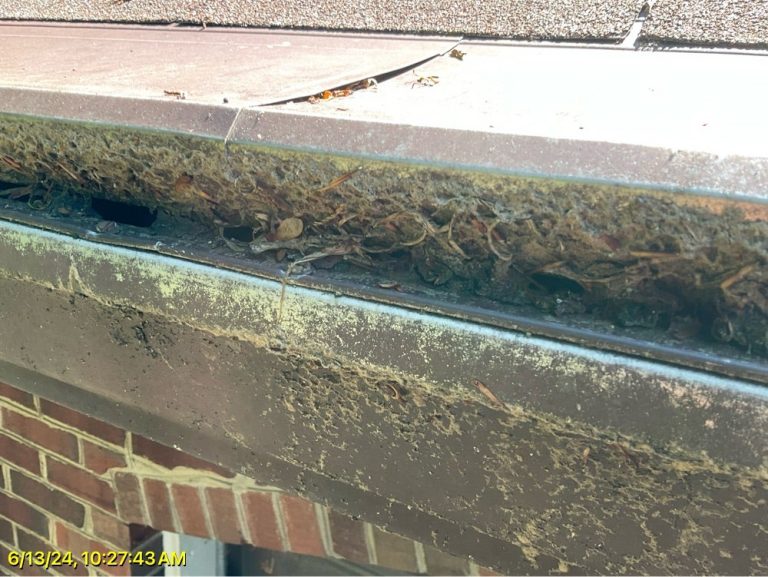
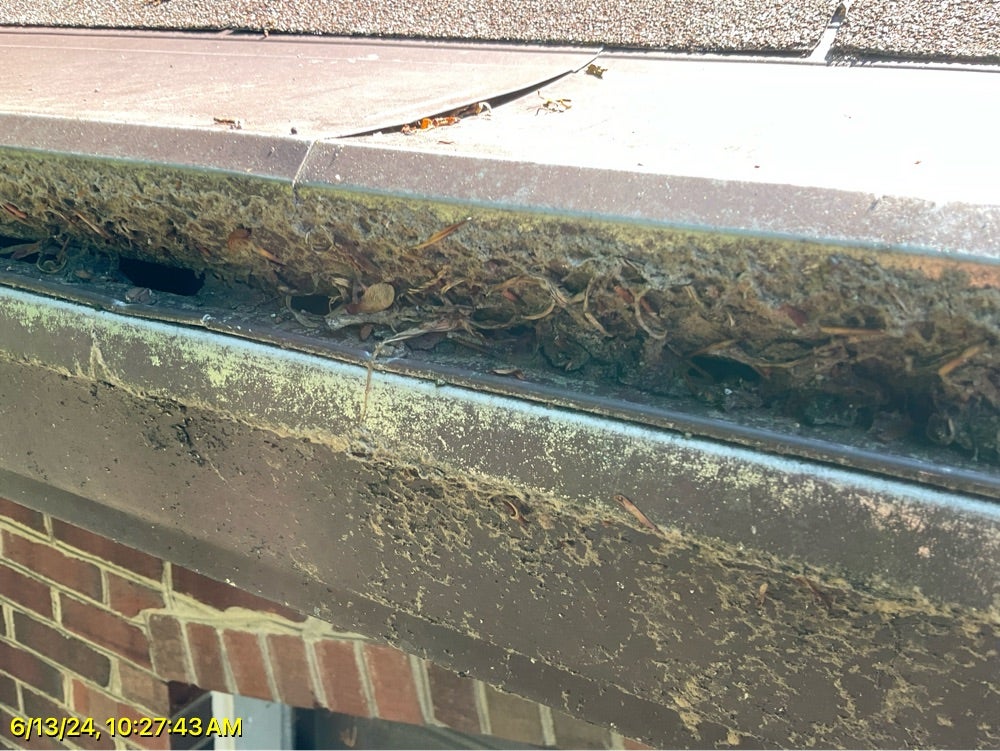
A gutter packed with needles and leaf debris before cleaning
Licensed & Insured◆Locally Owned & Operated in Tacoma◆Solutionists, Not Salespeople◆Seamless Gutters Made On-Site◆BroGuard Fine-Mesh Gutter Protection◆Free, No-Pressure Gutter Quotes◆Backed by 25+ Years of the National Brand◆Licensed & Insured◆Locally Owned & Operated in Tacoma◆Solutionists, Not Salespeople◆Seamless Gutters Made On-Site◆BroGuard Fine-Mesh Gutter Protection◆Free, No-Pressure Gutter Quotes◆Backed by 25+ Years of the National Brand◆

In Tacoma, twice a year is the minimum: once in late spring after the seed and blossom drop, and once in fall before the rain settles in. If your roof sits under Douglas fir, cedar, or big-leaf maple, three times a year is closer to right, because conifers shed steadily instead of all at once. The fall cleaning is the one that matters most. Tacoma gets about 76 percent of its annual rain between October and March, so a September cleaning lands ahead of the season and a November one is already inside it.

What the Rain Data Actually Says

Most gutter advice says “twice a year” and stops there. But when to clean gutters in Tacoma is a question our rainfall answers pretty precisely, using NOAA’s 1991 to 2020 climate normals.

Tacoma averages 40.8 inches of precipitation a year, but it does not arrive evenly. July averages 0.6 inches. August is 0.8. Then the line bends hard: September 1.6, October 4.1, November 6.5, December 6.0.

Add up October through March and you get 31.0 inches, which is about 76 percent of the year’s total falling in six months. The other six months split the remaining quarter. That is the whole argument for timing your cleaning instead of picking a random Saturday.

The Deadline Nobody Tells You About

Look at the jump from September to October. Rainfall goes from 1.6 inches to 4.1 inches, and October alone averages 15 days with precipitation. That is not a gradual shift into fall, it is a switch flipping.

Here is the corroborating detail, and it comes from the City of Tacoma rather than a weather chart. The city moves its street sweepers onto the leaf-season schedule “starting the third week in October,” abandoning the fixed residential routes because of the volume of leaves coming down.

Think about what that means for your roof. If the city considers leaf volume a citywide problem by the third week of October, your gutters have been collecting that same debris for weeks already, and the heaviest rain of the year is a few days out. A cleaning booked for September is preventive. One booked for late October is remedial. Same service, very different outcome.

The Tacoma Gutter Calendar

MonthAvg. rainWhat is happening up thereWhat to do
January6.0 inPeak rain, 20 wet daysCheck flow during a storm
February4.0 inStill wet, wind damage showsWatch for sagging and overflow
March4.4 inRain tapering, moss growingBook spring service
April3.4 inBuds, catkins, maple seedsNothing yet, wait out the drop
May2.0 inSeed and blossom drop finishesSpring cleaning, cleaning #1
June1.4 inDry season beginsGood window for repairs
July0.6 inDriest month, debris bakes inBest month for installs
August0.8 inFir needles accumulating quietlyInspect, book fall service
September1.6 inRain returns, needles heavyFall cleaning, cleaning #2
October4.1 inLeaf drop peaks, 15 wet daysLast call, schedules are full
November6.5 inWettest month, 19 wet daysStorm checks only
December6.0 inStanding water, 20 wet daysClear downspouts if overflowing

Gutter Cleaning Frequency, Honestly

The right number depends less on the calendar than on what is growing over your house.

Twice a year is right for most Tacoma homes with an open lot or only distant trees. Clean in May after the spring drop finishes, and again in September before the rain.

Three times is the realistic number if you have Douglas fir, cedar, or pine directly overhead. Conifers do not have a tidy leaf-drop season, they shed needles all year, and needles are worse than leaves because they pack into a dense mat in the bottom of the trough instead of sitting loosely on top. Add a midwinter check to the May and September visits.

Four times, or gutter guards, is worth considering if you have heavy mixed cover, a roof valley that funnels debris into one spot, or a two-story roofline that makes DIY checks genuinely unsafe. At that point you are paying for cleanings often enough that a guard system starts to pencil out.

One thing worth saying plainly: more frequent cleaning does not fix a gutter that is pitched wrong or short on downspouts. If yours overflow within weeks of a cleaning, the problem is the system, not the schedule.

Why the Timing Matters More Here

A clogged gutter in a dry climate is a nuisance. A clogged gutter in Tacoma in November is a system pushing 6.5 inches of water somewhere it should not go, over 19 separate days.

Overflow runs down the fascia and rots the wood the gutter is hanging on. It sheets against siding and windows. It pools at the foundation during the exact months the soil is already saturated and has nowhere to put more water. None of it happens suddenly, which is why it goes unnoticed until something expensive shows up. For a fuller look at what actually ends up in a Tacoma gutter and how fast, see our guide to local debris.

Book Before the Rain, Not During It

Here is the practical reality of this trade in the Pacific Northwest: everyone calls at the same time. The phone starts ringing the week of the first real storm, which is usually mid to late October, and by then the calendar is already tight. The homeowners who get the convenient appointment are the ones who booked in August or September, before anything was visibly wrong.

If you are reading this in summer, that is the good news. You have room to choose your date. Our gutter cleaning service covers the gutters and the downspouts by hand, with an inspection that flags loose hangers and early rot while the ladder is already up. If you would rather not think about it twice a year, the maintenance program puts you on a schedule so the timing takes care of itself.

Schedule online and pick your window while there are still windows to pick.

Frequently Asked Questions

When Should You Clean Gutters in Tacoma?

Clean twice a year: once in May after the spring seed and blossom drop finishes, and once in September before the wet season starts. September is the more important of the two, because Tacoma gets roughly 76 percent of its annual rain between October and March. Homes under conifers should add a midwinter cleaning.

How Often Should You Clean Your Gutters?

Twice a year is the minimum for most Tacoma homes. Three times is more realistic under Douglas fir, cedar, or pine, because conifers shed needles year round and needles pack into the bottom of the trough. Heavy mixed tree cover or a debris-collecting roof valley can justify four visits a year or a guard system.

What Is the Best Time to Clean Gutters in the Pacific Northwest?

Late summer through September. The dry season means debris is loose and easy to clear, access is safe, and the work lands before October, when Tacoma’s rainfall jumps from 1.6 inches to 4.1 inches. Waiting until the rain starts means cleaning a wet, heavy mat during the season instead of ahead of it.

Is October Too Late for Fall Gutter Cleaning in Tacoma?

Not too late to be worth doing, but you are behind the curve. The City of Tacoma shifts its street sweepers to the leaf-season schedule the third week of October because of leaf volume, and gutter schedules fill up the same week. A cleaning in October still helps; September is the window you actually want.

Licensed, Bonded & Insured  ·  Washington Contractor License #BRTHRBT745J1
Fir Needles, Cedar Flagging, and Bigleaf Maple: What Is Really Filling Your Gutters
Moss and conifer needles filling an old gutter trough
Licensed & Insured◆Locally Owned & Operated in Tacoma◆Solutionists, Not Salespeople◆Seamless Gutters Made On-Site◆BroGuard Fine-Mesh Gutter Protection◆Free, No-Pressure Gutter Quotes◆Backed by 25+ Years of the National Brand◆Licensed & Insured◆Locally Owned & Operated in Tacoma◆Solutionists, Not Salespeople◆Seamless Gutters Made On-Site◆BroGuard Fine-Mesh Gutter Protection◆Free, No-Pressure Gutter Quotes◆Backed by 25+ Years of the National Brand◆

Most gutter advice pictures a tidy pile of oak leaves. That is not what we pull out of gutters in Tacoma. Here it is Douglas fir needles packed into a mat, brown cedar foliage that blows out of the tree all winter, bigleaf maple leaves the size of a dinner plate, and moss and roof grit underneath. Pine needles in gutters are what homeowners ask about most, but they are one of four culprits, and each defeats a different kind of guard.

Why Tacoma’s Canopy Sits Above Your Roofline

Our debris mix is unusual because our trees are unusually tall. The City of Tacoma’s 2018 urban tree canopy assessment found canopy covering 20 percent of the city’s land area. More useful is the height breakdown from the same LiDAR analysis: 33 percent of that canopy stands between 50 and 100 feet, and another 8 percent is taller than 100 feet. That puts 41 percent of Tacoma’s canopy above 50 feet, taller than almost every house in the city.

Elsewhere, homeowners deal with trees beside the house. Here much of the canopy sits directly over the roof, so debris does not blow past your gutters. It lands in them.

1. Douglas Fir Needles

Douglas fir needles are about an inch long, flat, and coated in a waxy cuticle. Those properties make them the worst thing in a Tacoma gutter.

Leaves stack loosely and leave gaps. Fir needles interlock. They settle flat, align with the trough, and press into a felted mat that behaves less like debris than like a floor. Water coming off the roof does not soak through it, it runs across the top and over the front lip. This is why homeowners swear the gutters are clean and still watch them overflow: the needles are lying flat in the bottom, invisible from the ground, working as a false floor. The wax compounds it by slowing decomposition, so the mat never breaks down and washes away the way leaf litter partly does.

Conifers also have no leaf-drop season. WSU’s Hortsense program notes that conifers “periodically shed older needles” as a normal process, so a house under Douglas fir gets needles in July as well as November.

2. Western Red Cedar Flagging

If you have ever panicked in September because the inside of your western red cedar turned brown, that is flagging, and it is normal.

WSU Hortsense describes it precisely: brown foliage “develops on the tree or shrub in mid- to late summer and is very obvious by early fall,” appearing as brown branchlets called flags spread through the canopy. After a dry summer, Hortsense adds, western red cedar “often dramatically shed older needles.”

The timing is what matters for gutters. That dead foliage does not come down when it turns brown. Per Hortsense, “most of the dead foliage is blown out of the plant by the wind in fall and winter.” So what you watch going brown in early September reaches your gutters gradually, delivered by the same windstorms that bring the heaviest rain.

Flagging is finer and more fibrous than fir needles. It threads into downspout openings and knits into a plug, which is why a gutter under cedar can look passable along its length and still back up at the drop.

3. Bigleaf Maple

Bigleaf maple is the only deciduous tree here, and it makes the list on scale alone. Mature trees run 50 to 100 feet, and King County’s native plant guide notes the leaves “are huge and can be up to ten inches wide.”

A ten-inch leaf does not float and let water past. Wet, it flattens against the trough and acts as a dam, and one leaf in the wrong place at a downspout can back up an entire run. That is a different failure from needles: needles reduce capacity everywhere, maple leaves block flow at one point, suddenly.

King County also notes the wood “can be brittle and lose branches if exposed to much wind,” so a maple over your roof delivers twigs and branchlets along with the leaves.

We will not tell you which month your maple drops. It varies by tree, exposure, and year, and we could not find a Northwest university or agency willing to put a date on it either. Use the city’s own signal instead: Tacoma moves its street sweepers onto the leaf-season schedule starting the third week of October. Our Tacoma rain calendar covers timing cleanings around that.

4. Moss, Grit, and Shingle Granules

The layer nobody expects is at the very bottom, and it does not come from a tree.

Wet, shaded conditions grow moss on north-facing roof planes, and fragments wash into the gutter and settle. Composition shingles shed mineral granules as they age, and granules are heavy, so they never leave. Add roof grit and dry-season dust and you get sludge in the bottom of the trough.

This is the debris that quietly kills gutters. It holds moisture against the metal permanently, starting corrosion at seams and cut ends, and it adds weight that loosens hangers and pulls runs out of pitch. Because it is dense sediment rather than fluffy debris, no guard stops it and no blower moves it. One aside: unusually granular sludge can mean your roof is further along than you think, and is worth mentioning to a roofer.

Which Gutter Guards Actually Survive Fine Needles

This is where guard marketing falls apart, because a system that handles leaves beautifully can be useless against Douglas fir. How the styles actually behave:

Open screens and perforated aluminum stop maple leaves and do essentially nothing for needles. Where openings are wider than a needle, needles pass straight through, or wedge upright in the holes and build a mat on top.

Foam and brush inserts are the worst match for our debris. Fine needles embed in the foam or between the bristles and turn the insert into a filter that cannot be rinsed clean. You replace the product instead of cleaning the gutter.

Reverse-curve and surface-tension covers move leaves well, but fine needles and shingle grit cling to the nose of the curve and travel in with the water. They also do nothing about sediment.

Fine woven stainless micro-mesh on a rigid frame is the only category that reliably keeps fir needles and cedar flagging out, because the aperture is smaller than the debris. The honest caveat: it keeps needles out of the trough, not off the house. They can mat on top of the mesh, so the surface still needs periodic brushing, and the system has to be pitched correctly to shed rather than collect.

Under heavy conifer cover, a good gutter guard turns three or four cleanings a year into one inspection. Not into zero, and anyone promising zero has not worked under a Douglas fir. Two things pair well with guards: a 6-inch trough holds more usable depth before a needle mat costs you capacity, and 3×4 downspouts are harder for flagging to plug.

Getting It Out

Worth saying, because it is the question we get most: a leaf blower will not lift a packed needle mat, and the mat is the part causing the overflow. It has to come out by hand, with the downspouts flushed separately, since plugs form at the outlet and elbow where you cannot see them. Our gutter cleaning service does both and flags the sagging hangers and early fascia rot a needle mat’s weight tends to cause.

Frequently Asked Questions

How Do You Get Pine Needles Out of Gutters?

By hand, not with a blower. Fir and pine needles interlock into a compacted mat in the bottom of the trough that a leaf blower skims over without lifting. Scoop the mat out, then flush the downspouts separately, since needles form hidden plugs at the outlet and elbow. Work from a ladder on a dry day, never from the roof.

Do Gutter Guards Work for Pine Needles?

Only some styles. Open screens and standard perforated aluminum let fine needles through or trap them upright. Foam and brush inserts clog irrecoverably. Fine woven stainless micro-mesh over a rigid frame is the category that actually keeps Douglas fir needles out, though the mesh surface still needs periodic brushing.

Why Is My Western Red Cedar Turning Brown and Filling My Gutters?

That is cedar flagging, and it is normal. WSU Hortsense notes the brown foliage develops in mid to late summer and is very obvious by early fall, and that most of it is blown out of the tree by wind in fall and winter. So it reaches your gutters gradually across the wettest months rather than all at once.

What Tree Debris Clogs Gutters Most in Tacoma?

Douglas fir needles, because they mat flat and water runs over the top rather than through. Western red cedar flagging plugs downspouts, bigleaf maple leaves dam flow at specific points, and moss with shingle granules forms a heavy sludge in the bottom that no guard system stops.

Licensed, Bonded & Insured  ·  Washington Contractor License #BRTHRBT745J1