

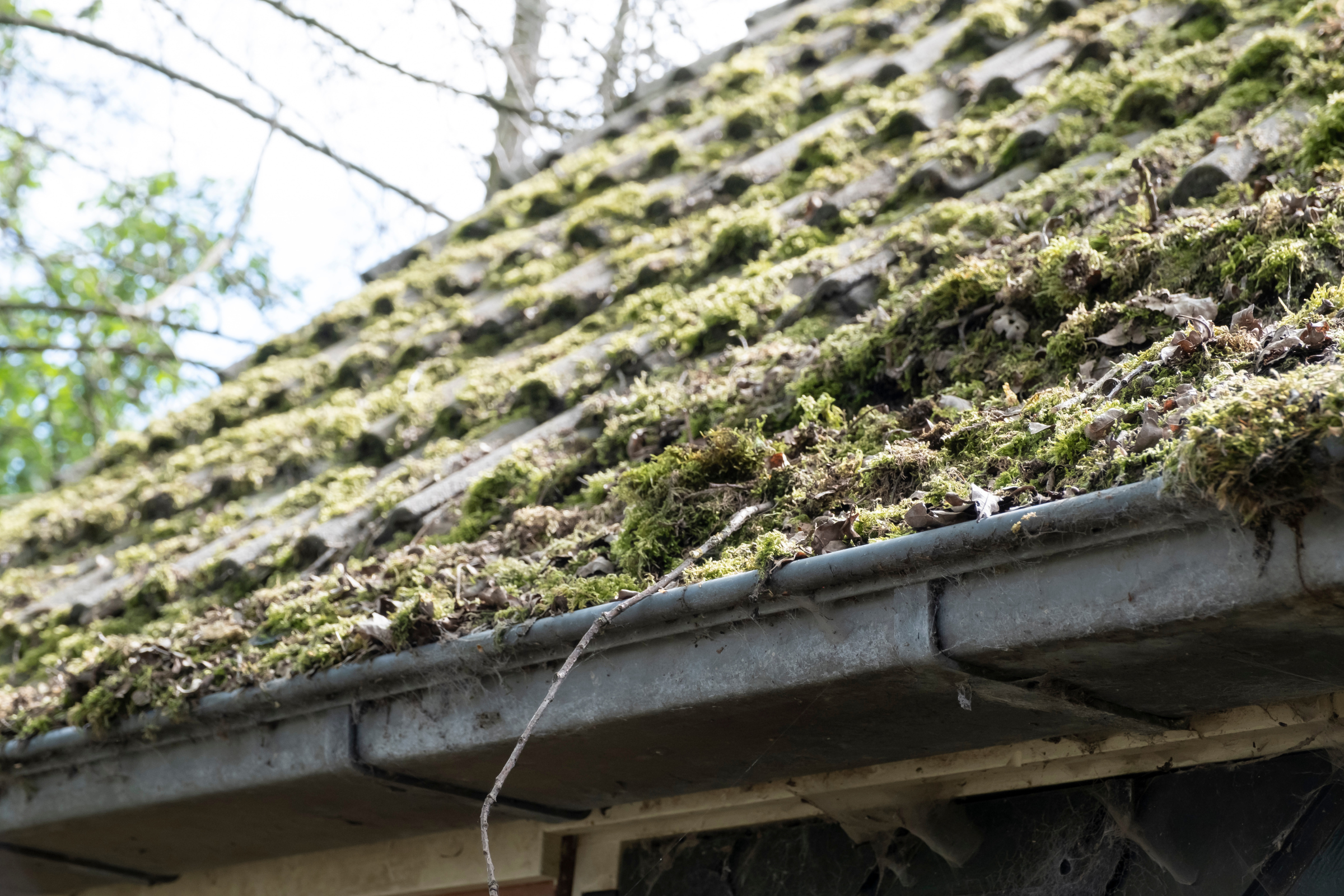
Everyone in western Washington knows about roof moss. Fewer people think about the moss growing in the gutter itself, which is a separate problem with a separate fix. Moss in gutters is not debris sitting on top of the trough, it is a living mat holding water in the bottom of it, and it behaves differently from needles or leaves. Here is why it grows so well here, what it actually does once it is established, and the honest line between a gutter job and a roof job.
Why It Grows So Well Here
Moss is not a sign that something went wrong. It is a sign you live in the right climate for it.
WSU’s Hortsense program, writing about moss generally, notes that mosses “grow vigorously in the cool, moist weather of fall, winter, and spring.” That single sentence explains the whole seasonal pattern homeowners experience. Moss does its real growing in exactly the months Tacoma is wet and cool, and our dry summers give it a long pause.
Which is why the moss you notice in October or February seems to have appeared out of nowhere. It did not. It grew through the previous wet season, went quiet during the dry months when nobody was looking up, and started expanding again the moment the rain returned. If you inspect gutters in July, you are inspecting them at the low point of the moss year.
Hortsense also lists what favors moss: heavy shade, poorly drained conditions, and acidity, among others. A north-facing gutter run under a conifer, holding a layer of decomposing needles, is close to an ideal habitat. That is not bad luck, it is a checklist.
What Moss Does Inside a Gutter
Three things, and none of them are the things people worry about.
It holds water. Moss is structurally good at retaining moisture, which is the opposite of what you want in a channel whose entire job is moving water out. A mossy trough stays wet between storms instead of draining and drying.
It blocks flow. A moss mat in the bottom of a gutter does what a fir needle mat does, but worse, because it is anchored and growing rather than loose. Water runs across the top of it and over the front lip. This connects directly to the sediment layer we covered in our guide to what fills Tacoma gutters: moss fragments, roof grit, and shingle granules combine into a dense base layer that no guard system stops.
It adds weight, permanently. Wet moss plus trapped sediment is heavy, and unlike leaves it never dries out and lightens between storms. That constant load is what loosens hangers and pulls runs out of pitch, which then causes standing water, which then grows more moss. The loop closes on itself.
The thing homeowners usually ask about, whether moss is eating the metal, is the least of it. Aluminum does not rot. The real damage is permanent moisture at seams and cut ends, added weight, and a run that has quietly lost its slope.
What It Does on the Roof, Which Is a Different Job
Roof moss matters, and the research on it is clear. Oregon State University Extension notes that moss on a roof “traps soil and debris, holding moisture and extending the time wood roofs remain wet,” which “invites fungi, speeds decomposition and shortens roof life.” On asphalt and metal roofs, OSU says moss “can lift shingles and allow water to penetrate and damage underlying layers.”
That is a roofing problem with roofing consequences. OSU also cautions that improper pressure washing technique can damage shingles, and suggests a long-handled brush or a professional instead of blasting at it.
Here is our position, plainly. We are a gutter company. We clear moss and debris out of the gutter run and downspouts, and we will tell you what we can see of your roof from the ladder. We are not the right people to treat, brush, or wash a mossy roof. Anyone searching for roof moss removal in Tacoma should be talking to a roofing or roof-cleaning specialist whose actual trade that is. The two jobs get sold together constantly and they are not the same skill. Walking a wet, mossy roof is how people get hurt.
The Part About Runoff, Which Is Our Business Too
This is where a gutter company genuinely has something to add, and it comes in two halves.
First, a warning specific to gutters. OSU cautions against using zinc sulfate products where a roof has copper gutters, downspouts, or flashing, because zinc corrodes copper. If you have copper gutters, a moss treatment applied to the roof above them can quietly damage a very expensive gutter system. Ask before anyone treats your roof.
Second, the water quality issue. Whatever gets applied to a roof ends up in the gutter, then the downspout, then wherever your roof water goes. The Washington Department of Ecology reports that copper and zinc “are among the most common pollutants found in Puget Sound,” that zinc is “toxic to fish and plants,” and that in its breakdown of zinc in urban runoff, “moss control is the biggest slice of the pie.” Not tires, not roofing metal. Moss control. Seattle Public Utilities adds that moss killers containing zinc or copper sulfates “are toxic to aquatic life and are not biodegradable,” and that users “should be careful to avoid runoff of materials into storm drains or surface water.”
The upshot is not that you should tolerate moss. It is that how it comes off matters. Physically clearing a gutter and bagging the material keeps it out of the storm system entirely. Chemical treatment on the roof above, rinsed into gutters that discharge to a storm drain, is the version with a downstream cost, and Tacoma’s surface water system runs to Commencement Bay.
If your gutters need clearing, our gutter cleaning service removes moss and debris from the trough and downspouts by hand and hauls it away, and flags the loosened hangers and lost pitch that a moss load tends to leave behind.
Frequently Asked Questions
Why Is Moss Growing in My Gutters?
Because your gutters offer exactly what moss wants. WSU notes that moss grows vigorously in the cool, moist weather of fall, winter, and spring, and that shade, poor drainage, and acidity all favor it. A shaded gutter run holding decomposing needles and standing water is close to ideal habitat, which is why north-facing runs under conifers are usually the worst.
Does Moss Damage Gutters?
Indirectly, yes. Moss does not eat aluminum, but it holds moisture against the metal permanently, which promotes corrosion at seams and cut ends. It blocks flow so water runs over the front lip, and its weight, which never dries out, loosens hangers and pulls runs out of pitch. The lost slope then creates standing water, which grows more moss.
Is Moss Removal Part of Gutter Cleaning?
For the gutters themselves, yes. Clearing moss out of the trough and downspouts is part of a proper cleaning, and the material should be bagged rather than rinsed into the storm system. Treating moss on the roof is a different trade and a different skill set, and it belongs to a roofing or roof-cleaning specialist rather than a gutter crew.
Licensed, Bonded & Insured · Washington Contractor License #BRTHRBT745J1