

Quick answer
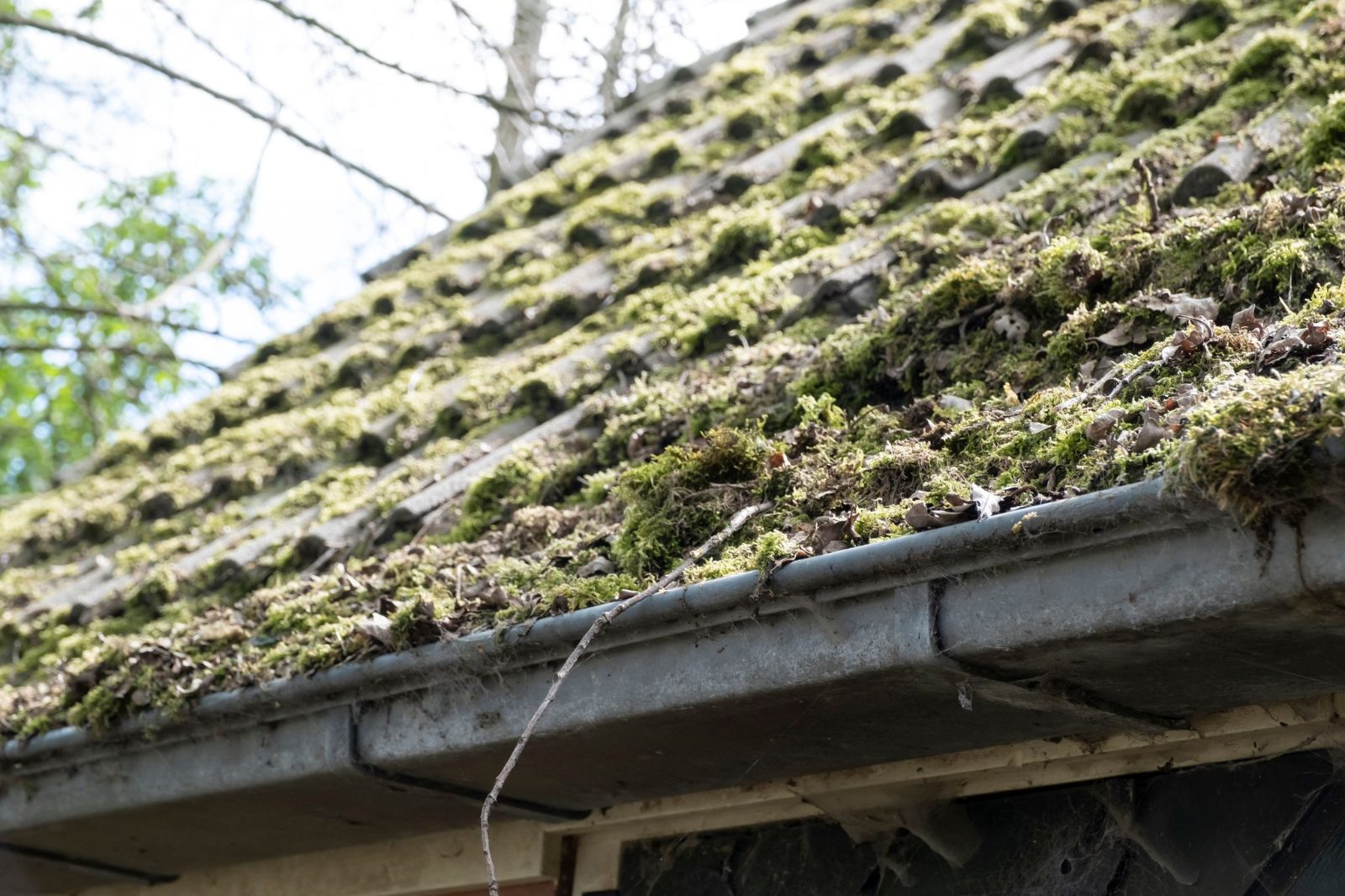
Moss in gutters in Tacoma, WA: Moss in a gutter is not loose debris. It is a living mat anchored to the bottom of the trough, and it grows hardest in the cool, wet months from fall through spring. It holds water against the metal, blocks flow so rain runs over the front lip, and adds a load that never dries out, which loosens hangers and flattens the pitch. The fix is to scrape it out, bag it so it stays out of the storm drains, flush every downspout and correct any sag, while roof moss stays a separate job for a roofing specialist. Call (253) 777-1572 or request a free quote.
Moss season in the South Sound
Why moss loves a South Sound gutter
Moss in your gutters does not mean something went wrong. It means you live in exactly the climate moss was built for, and your gutter is offering it a very good home.
Everyone in western Washington knows about roof moss. Fewer people think about the moss growing in the gutter itself, and it is a different problem with a different fix. Needles and leaves sit in a trough. Moss lives there. It roots into the sediment at the bottom, spreads along the run, and keeps growing for as long as the gutter stays damp.
WSU’s Hortsense program, writing about moss in general, notes that mosses “grow vigorously in the cool, moist weather of fall, winter, and spring.” That one line explains the whole pattern homeowners see. Moss does its real growing in the exact months Tacoma is wet and cool, and our dry summers give it a long rest.
That is why the moss you notice in October or February seems to appear out of nowhere. It did not. It grew through the last wet season, went quiet in July and August when nobody was looking up, and started spreading again the week the rain came back. If you check your gutters in midsummer, you are looking at them at the low point of the moss year, and they will look better than they really are.
The conditions moss is looking for
Hortsense lists what favors moss: heavy shade, poorly drained conditions and acidity, among others. Now picture a north-facing gutter run under a Douglas fir, holding a layer of decomposing needles that stays wet from October to April. That is not bad luck. That is the whole checklist in one place.
- North-facing runs that never get direct sun between November and March.
- Gutters under firs, cedars or hemlock, where needles break down into acidic organic sludge.
- Runs below a roof valley or a mossy roof plane that sheds clumps every storm.
- Sections that have lost their slope and hold a strip of standing water.
- Low gutters over porches and garages, tucked behind tall shrubs or a fence.
- Any run that has gone more than a wet season without being cleaned out.
If two or three of those describe your house, moss is probably already established in at least one run, even if the gutters look fine from the driveway. Our moss and needle season page covers how the whole wet season plays out on a South Sound roofline.
What it does
What moss does inside a trough
Three things, and none of them is the thing people usually worry about.
It holds water
Moss is built to hang onto moisture, which is the opposite of what you want in a channel whose whole job is moving water off the house. A mossy trough stays wet between storms instead of draining and drying. That keeps the seams, end caps and cut edges damp for months at a time.
It blocks flow
A moss mat in the bottom of a gutter does what a packed needle mat does, only worse, because it is anchored and growing instead of sitting loose. Water runs across the top of it and over the front lip. Moss fragments, roof grit and shingle granules also bind together into a dense base layer. We break down that sediment layer, and the needles that feed it, in our guide to what is really filling Tacoma gutters.
It adds weight that never goes away
Wet moss plus trapped sediment is heavy, and unlike a pile of leaves it never dries out and lightens up between storms. That constant load is what loosens hangers and pulls a run out of pitch. A run that has lost its pitch holds standing water. Standing water grows more moss. The loop closes on itself, and every winter it gets a little worse.
| What you see from the ground | What the moss is doing | What fixes it |
|---|---|---|
| Water sheeting over the front lip in ordinary rain | A mat in the bottom has raised the floor of the trough | Hand scraping the full run, then a downspout flush |
| A strip of standing water days after the rain stops | Weight has pulled the run out of slope | Cleaning plus rehanging and re-pitching that section |
| A run dipping between hangers | Constant wet load has loosened the fasteners | New hangers into sound wood, or fascia work first |
| Green tufts sticking up out of the gutter | Moss has rooted in sediment and is spreading | Full clean-out, then a guard to stop the clumps feeding it |
| Drips and stains below a seam or end cap | Permanent moisture is working on the sealant | Reseal, or replace that section with seamless |
| A downspout that dribbles in a steady rain | Moss and grit have plugged the outlet or elbow | Clear the outlet and flush the full downspout |
Is moss eating my aluminum?
This is the question we hear most, and it is the least of the problem. Aluminum does not rot. The real damage is the permanent moisture at seams and cut ends, the added weight, and a run that has quietly lost its slope. When that turns into failed sealant or sagging sections, our gutter repair crew rehangs and reseals what can be saved and tells you plainly when a run should be replaced.
The honest line
Moss in the gutter or on the roof: two different jobs
The two get sold together all the time. They are not the same skill, and the difference matters for your roof and for the person on the ladder.
Roof moss is a real problem, and the research on it is clear. Oregon State University Extension notes that moss on a roof “traps soil and debris, holding moisture and extending the time wood roofs remain wet,” which “invites fungi, speeds decomposition and shortens roof life.” On asphalt and metal roofs, OSU says moss “can lift shingles and allow water to penetrate and damage underlying layers.” OSU also cautions that poor pressure washing technique can damage shingles, and points homeowners toward a long-handled brush or a professional instead.
That is a roofing problem with roofing consequences. Here is our position, plainly. We are a gutter company. We clear moss and debris out of the gutter runs and the downspouts, and we tell you what we can see of the roof from the ladder. We are not the right people to treat, brush or wash a mossy roof, and if that is what you need, talk to a roofing or roof-cleaning specialist whose trade it actually is. Walking a wet, mossy roof is how people get hurt, so our crews work from ladders.
What we will tell you from the ladder
- Which roof planes are shedding moss clumps into the gutter, and how fast.
- Whether the gutter sediment is unusually heavy with shingle granules, which is worth mentioning to a roofer.
- Whether moss has crept under the first course of shingles at the gutter edge.
- Whether the fascia behind the gutter feels sound or soft to the hand.
- Whether any downspout ties into a buried line, so roof treatment runoff has somewhere to go besides your beds.
- Whether a fine mesh guard would stop the clumps feeding the moss in your trough.
If your roof is getting treated this season
Order matters. Roof cleaning and treatment knock a lot of moss loose, and much of it ends up in the gutter. Book the gutter clean-out after the roof work, not before, or you will be paying to clean the same troughs twice. And if your fascia has been wet behind a mossy gutter for years, have it checked before anything new is hung on it. Our fascia board repair page explains what we look for.
Clearing it the right way
How moss should come out, and where it should not go
Getting moss out of the gutter is half the job. Making sure it does not end up in Puget Sound is the other half.
Ask before anyone treats a roof above copper gutters
OSU Extension cautions against using zinc sulfate products where a roof has copper gutters, downspouts or flashing, because zinc corrodes copper. If you have copper gutters, a moss treatment on the roof above them can quietly damage one of the most expensive gutter systems you can own. Ask what product is going on before the work starts.
Whatever goes on the roof ends up downstream
Anything applied to a roof rinses into the gutter, then the downspout, then wherever your roof water goes. The Washington Department of Ecology reports that copper and zinc “are among the most common pollutants found in Puget Sound,” that zinc is “toxic to fish and plants,” and that in its breakdown of zinc in urban runoff, “moss control is the biggest slice of the pie.” Not tires, not roofing metal. Moss control. Seattle Public Utilities adds that moss killers containing zinc or copper sulfates “are toxic to aquatic life and are not biodegradable,” and that users “should be careful to avoid runoff of materials into storm drains or surface water.”
The point is not to live with moss. It is that how it comes off matters. Scraping a gutter and bagging what comes out keeps that material out of the storm system entirely. Chemical treatment rinsed into gutters that drain to a storm line is the version with a downstream cost, and Tacoma’s surface water system runs to Commencement Bay. If you are not sure where your downspouts go, our post on downspouts, tightlines and Tacoma stormwater rules walks you through finding out.
How our crew clears a mossy gutter
- Ladders, not the roof.We set up from the ground and never walk a wet, mossy roof to reach a gutter.
- Scrape the mat.Moss, needles and sediment come out of every run, including inside corners and the outlet where plugs start.
- Bag everything.What we pull out is bagged and hauled away. Nothing is rinsed down the downspout or blown into your beds.
- Flush every downspout.Water runs through each one so we know it drains all the way to the bottom.
- Check slope and hangers.Where the moss load pulled a run out of pitch, we point it out and can rehang it so water stops pooling.
- Tell you what comes next.You hear what we saw on the roof edge and the fascia, and whether a guard is worth it at your house.
Keeping it from coming back
Two things break the loop. The first is timing: a clean-out in early fall, before the moss starts its wet-season growth, and again in spring if your runs are heavily shaded. Our Tacoma rain calendar lays out the windows, and the maintenance program books them for you. The second is cutting off the supply. BroGuard fine metal mesh keeps fir and cedar needles and roof moss clumps out of the trough, so moss has nothing to root in. In deep shade, moss can still grow on top of any guard, so a yearly look and a light brushing keep the mesh open. Our full gutter cleaning service runs from Tacoma’s North End to Puyallup and Federal Way.
Moss growing in your gutters? Call (253) 777-1572
Get a Free EstimateFrom the crew: the fastest moss check you can do without a ladder is a walk around the house during a steady rain. Any run where water sheets over the front edge while the downspout below it barely runs has something growing or packed in the bottom, and on the north side of the house it is usually moss.
Frequently Asked Questions
Because your gutters offer what moss wants. WSU notes that moss grows vigorously in the cool, moist weather of fall, winter and spring, and that shade, poor drainage and acidity all favor it. A shaded run holding decomposing fir or cedar needles and a strip of standing water is close to ideal, which is why north-facing runs under conifers are usually the worst.
Indirectly, yes. Moss does not eat aluminum, but it keeps the metal wet at seams and cut ends, blocks flow so water runs over the front lip, and adds a load that never dries out. That weight loosens hangers and pulls runs out of pitch, and the lost slope then holds standing water that grows more moss.
For the gutters themselves, yes. Clearing moss from the troughs and downspouts is part of a proper cleaning, and the material should be bagged, not rinsed into the storm system. Treating moss on the roof is a different trade, and it belongs to a roofing or roof-cleaning specialist rather than a gutter crew.
A fine mesh guard keeps the moss clumps that wash off the roof out of the trough, which is where most gutter moss starts, and it keeps out the needles moss roots in. In deep shade moss can still grow on top of any guard, so plan on a yearly check and a light brushing.
Be careful with it. OSU Extension warns that zinc sulfate products corrode copper gutters and flashing, and the Washington Department of Ecology reports that moss control is the largest source of zinc in urban runoff reaching Puget Sound. Whatever goes on the roof drains through your gutters, so ask what product is being used and where your downspouts discharge.
Early fall, before the wet season starts and moss begins its main growing stretch. Heavily shaded runs often need a second clean-out in spring.
Free estimates
Ready to get the moss out of your Tacoma gutters before the wet season?
Free, no-pressure written estimates from local Solutionists. Hand cleaning with every bag hauled away, downspouts flushed, sagging runs rehung, and BroGuard fine metal mesh when you want the moss to stop coming back.
The Brothers That Just Do Gutters · Tacoma · (253) 777-1572 · Serving Tacoma, WA and the South Sound
Licensed, Bonded & Insured · Washington Contractor License #BRTHRBT745J1